If rainwater is coming in under a door, dripping behind a window frame, or seeping through a hairline crack in a foundation wall during a Central Coast storm, call Coastal Restoration at (805) 345-7440. The company is an IICRC Certified Firm, answers the phone 24/7, and holds a 5.0 Google rating across 32 reviews for Santa Maria-area water damage calls. A technician can usually get extraction equipment on site the same day to stop the water before it reaches the subfloor or the ceiling below.
Should You Call a Roofer or a Water Damage Restoration Company First?
Call a water damage restoration company first whenever water is already inside the house. Call the roofer or window installer afterward to seal the actual entry point. Restoration crews stop the spread and start drying immediately, while a roofer’s repair can usually wait a day or two once the leak is slowed.
Rain that finds its way under a door sweep or through old window flashing in Santa Maria’s older stucco homes is rarely a roofing problem at all. It is more often a failed weatherstrip, a cracked sealant joint, or site grading that pushes runoff toward the foundation instead of away from it. A restoration technician can usually tell within minutes whether the water traveled through the wall cavity, under the slab, or straight through the door threshold, which tells the homeowner who to call next for the permanent fix.
Rainwater that enters through a window or door typically starts as what the industry calls Category 1 water, clean and not yet contaminated. If it is wind-driven storm rain or has picked up dirt and debris running across the yard, treat it the way the IICRC S500 standard treats surface water: assume higher contamination and keep people, especially kids and pets, away from the wet area until it has been assessed.
What Happens When You Call for a Rain Leak Emergency?
A technician asks where the water is entering, how fast it is moving, and whether it has reached outlets, flooring, or a ceiling below, then dispatches extraction equipment and moisture meters to the property, often the same day.
Before the crew arrives, it helps to know the address, which room is affected, whether the breaker to that area has been shut off if water is near an outlet, and roughly how long the leak has been running. Photos of the standing water and any staining help document the loss for the insurance file later.
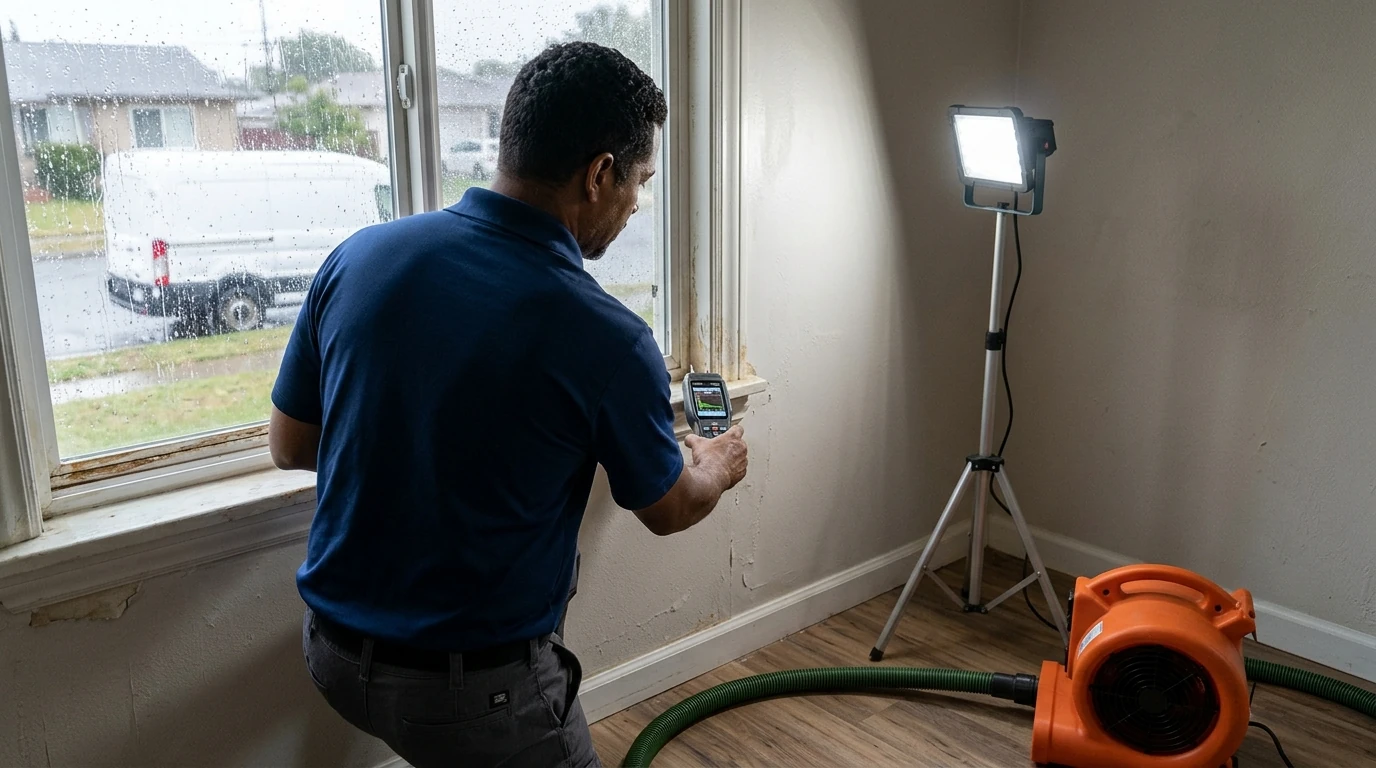
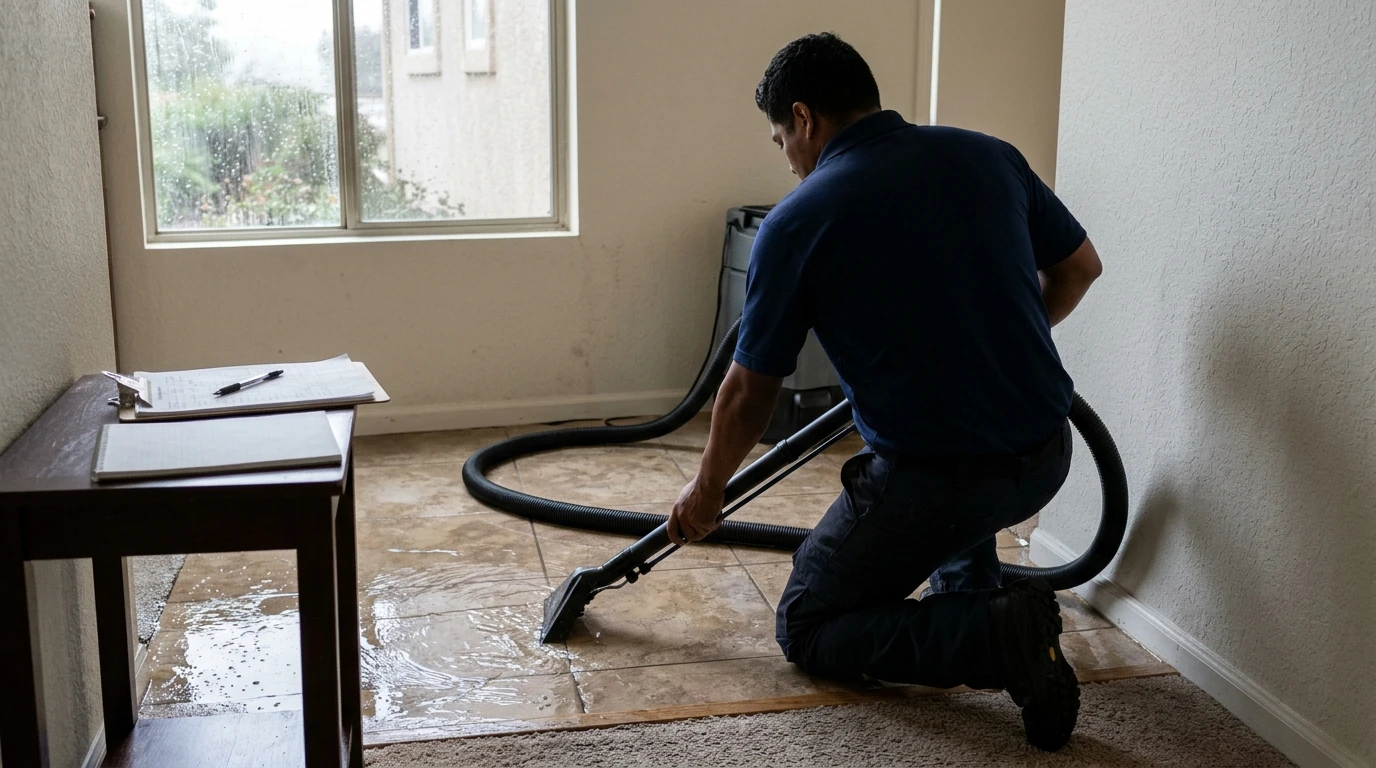
On arrival, the technician extracts any standing water, pulls back wet carpet pad if needed, and takes moisture readings in the drywall and subfloor with a penetrating meter. If the ceiling below a window or roofline is staining or sagging, that is a different failure pattern, and the ceiling water damage guide covers what that specific call looks like. Air movers and a dehumidifier go in the same visit to start structural drying before the drywall or baseboards have a chance to wick more water upward.
How Fast Does a Rain Leak Turn Into Mold?
Mold can start growing on wet drywall, baseboards, or carpet padding within 24 to 48 hours, according to the EPA, which is why drying needs to start the same day the leak is found, not after the storm passes.
That window is shorter than most homeowners expect. A door threshold that stays damp over a three-day storm, or a window sill that gets wet every time it rains and air-dries slowly in between, is exactly the pattern that lets mold establish inside a wall cavity where nobody can see it. A musty smell, bubbling paint, or a soft spot in the drywall near the leak are signs the moisture has been there longer than one storm.
If mold has already started, that is a separate scope of work from drying out the leak itself. A mold remediation crew handles containment and removal once the moisture source has been stopped.
Does Homeowners Insurance Cover Sudden Rain Intrusion?
Most homeowners policies cover sudden, accidental water damage, including wind-driven rain that finds a new gap around a window or door during a storm, but they typically exclude damage from a leak that has been dripping unnoticed for weeks or months, according to the Insurance Information Institute.
The distinction insurers look for is sudden versus gradual. A storm that drives rain through a window during one heavy weather event looks different on an adjuster’s report than water stains that clearly built up over several rainy seasons. Photographing the damage as soon as it is found, and starting mitigation right away, protects the claim either way, since every policy requires the homeowner to take reasonable steps to prevent further damage.
Rain that comes in as surface water flowing across the yard and into the house, rather than through a specific gap in the building, is typically treated as flood damage and is usually excluded from a standard homeowners policy. That situation needs a separate flood policy through the National Flood Insurance Program.
Document the leak with photos before anything dries out, then request a water damage assessment or call (805) 345-7440 if water is still actively coming in. Getting a technician on site before drywall or flooring is pulled out on its own schedule protects both the structure and the insurance claim behind it.
About Coastal Restoration
An IICRC Certified Firm serving Santa Maria and the Central Coast, including Orcutt, Lompoc, and Santa Ynez, the company carries California contractor license #11245226 and staffs WRT and ASD certified water damage restoration technicians. It answers the phone 24/7 and holds a 5.0 Google rating from 32 reviews for emergency water damage calls across the region.
Need help now? Call Coastal Restoration at (805) 345-7440.