Emergency Ceiling Water Damage Repair in Santa Maria
Emergency ceiling water damage repair in Santa Maria and surrounding areas. IICRC-certified, insurance billing accepted. Call (805) 345-7440.
Water coming through your ceiling? Call now for emergency service before a wet spot becomes a collapsed ceiling. A ceiling leak rarely stays a cosmetic problem for long: water that pools above drywall or lath and plaster saturates the material, adds weight, and can bring the whole section down without warning. If you’re seeing a spreading water stain, a soft or sagging patch, or active dripping, the priority is getting the water source controlled and the saturated materials assessed before the ceiling fails.
What ceiling water damage repair actually involves
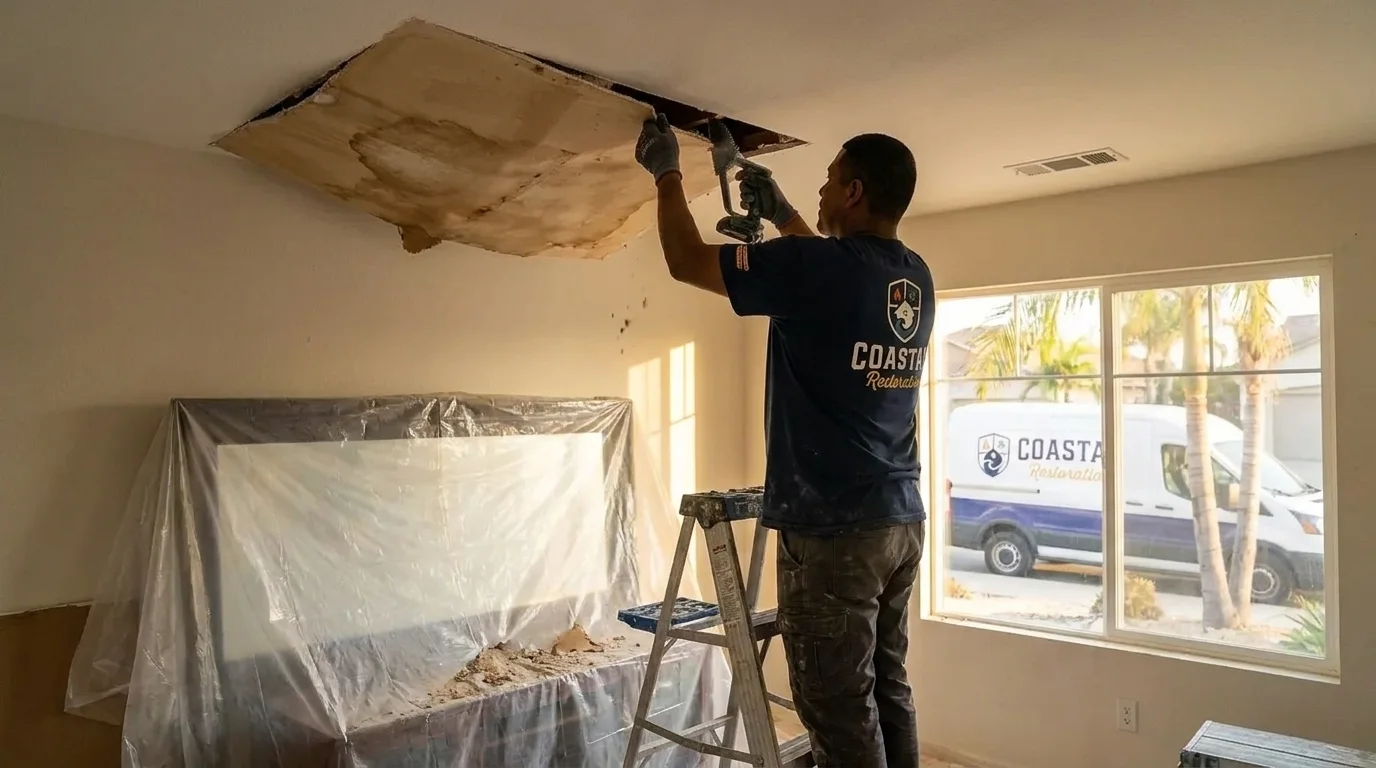
Ceiling water damage repair starts with figuring out where the water is actually coming from, which is not always obvious. A stain in the middle of a living room ceiling can trace back to a second-floor bathroom supply line, a roof penetration three feet away, or an HVAC condensate line that’s been dripping slowly for weeks. Once the source is identified and stopped, the work shifts to the ceiling assembly itself: drywall or plaster, insulation batts or blown-in fill, and the framing members above. Each of those materials holds water differently and dries on a different timeline, which is why moisture meters and thermal imaging matter more here than a visual check. A small stain might only need a localized patch and repaint. A ceiling that’s spongy to the touch, visibly bowing, or holding standing water in a light fixture usually means the drywall and insulation have to come out before anyone can safely assess the framing underneath.
Our process
- Source control and safety check. We confirm the water source is stopped (or identify that it’s ongoing, such as an active roof leak during a storm), and check for electrical hazards around light fixtures, fans, or recessed lighting before anyone works under the ceiling.
- Moisture mapping. Using penetrating moisture meters and thermal imaging, we trace how far the water has traveled laterally, since ceiling leaks often migrate well beyond the visible stain before showing up at the surface.
- Controlled demolition. Saturated drywall or plaster is cut back to dry, sound material using flood cuts rather than guesswork, and wet insulation is bagged and removed since fiberglass and cellulose rarely dry out in place.
- Structural drying. Air movers and dehumidifiers are positioned to dry the exposed framing and surrounding structure, with moisture readings logged until materials reach a dry standard before any rebuild starts.
- Rebuild and texture match. New drywall, insulation, and texture are matched to the existing ceiling finish, then primed and painted so the repair blends rather than leaving a visible patch.
What separates a good ceiling water damage response from a bad one
The most common mistake is treating a ceiling stain as a paint problem instead of a moisture problem. Painting over a stain without drying the cavity behind it just hides active moisture, which sets up mold growth inside the ceiling cavity within one to two days in a warm, humid space. Another frequent miss is ignoring insulation: wet fiberglass batts lose their R-value and can hold moisture against framing long after the drywall surface feels dry to the touch. A careful operator also checks whether the leak has reached electrical boxes or wiring runs, something insurance adjusters specifically look for in photo documentation, since it changes both the safety picture and the scope of covered repairs. Adjusters also want to see moisture readings before and after drying, not just a before-and-after photo of the ceiling, so documentation at each stage matters for the claim.
What does ceiling water damage repair cost?
Typical costs vary widely depending on how much of the ceiling has to be removed, whether insulation and framing are affected, and whether the ceiling has a textured or plaster finish that’s harder to match. Every loss is different, and Coastal Restoration Services Inc provides a written scope of work before any repair begins so there are no surprises once the ceiling is opened up. Homeowners insurance typically covers sudden and accidental water damage, such as a burst supply line, but often excludes damage from long-term leaks or deferred roof maintenance, so the cause of the leak matters for coverage.
| Scenario | Typical range |
|---|---|
| Small stain, spot patch and repaint | $300 - $800 |
| Single room drywall section with wet insulation | $1,200 - $3,000 |
| Sagging ceiling requiring full section tear-out | $2,500 - $6,000 |
| Plaster or lath ceiling repair (older homes) | $3,000 - $8,000 |
| Repair involving framing or structural members | $5,000 - $12,000+ |
Seasonal & regional considerations
Santa Maria’s rainy season brings most of the area’s roof-related ceiling leaks, particularly during atmospheric river storms when wind-driven rain finds its way through aging roof penetrations, flashing, and skylights. Many homes in the area’s older neighborhoods still have plaster or textured ceilings original to construction, which can complicate both drying and texture matching compared to newer drywall. Coastal fog and marine layer humidity also mean a slow ceiling leak can sit unnoticed longer than it would in a drier inland climate, since the ambient moisture masks the early signs.
Service area
Coastal Restoration Services Inc responds to ceiling water damage calls throughout Santa Maria and nearby communities including Orcutt, Nipomo, Guadalupe, and Lompoc.
If your ceiling is actively dripping, sagging, or showing a spreading stain, schedule a moisture assessment now so we can trace the source and stop further damage before the ceiling gives way.
Frequently Asked Questions
Does homeowners insurance cover ceiling water damage repair?
How can I tell if a ceiling stain is an old leak or an active one?
Is it safe to puncture a sagging, water-filled ceiling myself?
How long does a ceiling have to dry before it can be repaired?
Do older textured ceilings need testing before repair?
Looking for the best ceiling water damage repair company in Santa Maria?
Coastal Restoration Services Inc provides licensed and insured ceiling water damage repair in Santa Maria, CA and the surrounding area. Customers rate us 5.0 out of 5 stars across 29 Google reviews. We answer calls 24/7 — call (805) 345-7440 for immediate help.
Need Ceiling Water Damage Repair now?
We respond 24/7 across Santa Maria and surrounding CA cities.
Related Coverage
- Our Restoration Services
- Contact Coastal Restoration Services Inc
- Restoration Services in Arroyo Grande
- Restoration Services in Atascadero
- Restoration Services in Avila Beach
- Restoration Services in Ballard
- Restoration Services in Blacklake
- Restoration Services in Buellton
- Restoration Services in Callender
- Restoration Services in Cambria
- Restoration Services in Edna
- Restoration Services in El Paso de Robles
- Restoration Services in Grover Beach
- Restoration Services in Guadalupe