TL;DR: Fire damage restoration in California typically costs $3,000 to $8,000 for a single contained room, $10,000 to $30,000 for a multi-room fire with structural loss, and $40,000 or more for a whole-house fire that needs rebuilding. Smoke odor removal alone, with no visible char, often runs $500 to $2,500. The real cost driver is how far smoke and soot traveled through the house, not just where the flames burned.
If a kitchen fire just scorched your cabinets and the fire department left standing water on the floor, soot drifting through the HVAC returns, and a smell that’s already in the carpets two rooms away, you’re probably staring at two numbers right now: what a restoration estimate is about to say, and what your adjuster says the policy will pay. Fire damage restoration costs in California swing widely for exactly that reason. Soot and smoke move further and faster than most homeowners expect, and the cleanup scope usually extends well past the room where the fire started.
How Much Does Fire Damage Restoration Cost in California?
Fire damage restoration in California typically costs $3,000 to $8,000 for a single room with contained smoke damage, $10,000 to $30,000 for a multi-room fire with moderate structural loss, and $40,000 or more for a whole-house fire that requires reconstruction. These are typical industry ranges, not a quote, and every loss gets scoped individually once a technician sees the actual soot penetration and structural damage.
| Scenario | Typical Cost Range |
|---|---|
| Smoke odor removal only, no visible char or soot | $500 - $2,500 |
| Single room, contained fire, light soot | $3,000 - $8,000 |
| Kitchen fire with cabinet or appliance replacement | $8,000 - $20,000 |
| Multi-room fire, moderate structural damage | $10,000 - $30,000 |
| Contents cleaning and pack-out (per job) | $1,500 - $6,000 |
| Whole-house fire with structural rebuild | $40,000 - $150,000+ |
California jobs often land toward the higher end of these ranges. Labor and disposal costs run above the national average, and any rebuild that opens exterior walls usually triggers Title 24 energy-code upgrades, which add cost that a typical national estimate wouldn’t include. For a closer look at job-specific pricing in this market, see our companion guide on fire damage restoration cost in Santa Maria.
What Factors Drive Fire Damage Restoration Costs Up or Down?
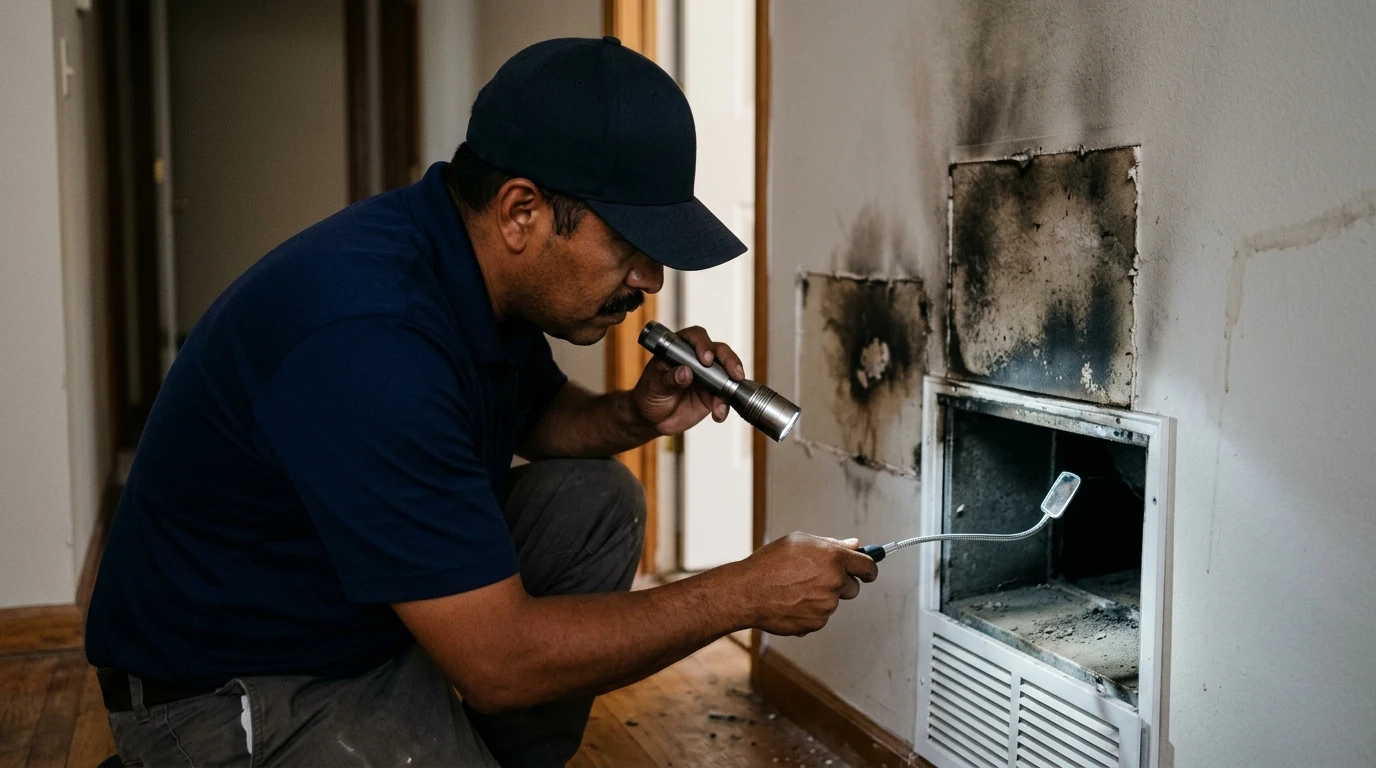
The biggest cost driver usually isn’t the fire itself, it’s how far the smoke traveled and what it touched. A contained grease fire that stayed in one pan costs far less than the same fire if the smoke alarm triggered the HVAC system and pulled soot into every supply vent in the house.
Specific factors that move the number:
- Square footage affected by smoke, not just flame. Soot travels through ductwork, attic space, and wall cavities long before anyone smells it in the next room.
- Type of soot: protein-based residue from a kitchen fire clings to surfaces and often needs stronger cleaning agents than the dry, powdery soot from a synthetic-material fire.
- Water used to fight the fire. Most fire losses carry a secondary water damage component, which adds extraction and structural drying to the scope.
- Contents restoration vs. replacement. Cleanable upholstery, electronics, and textiles cost less to restore than replace, but heavily charred or saturated items usually get written off.
- Code-required upgrades triggered when walls or electrical systems are opened during reconstruction.
- HVAC contamination, which usually means duct cleaning or full duct replacement on top of the structural work.
Will Homeowners Insurance Cover Fire Damage Restoration?
Most standard homeowners insurance policies cover fire damage restoration, because fire is one of the named perils every standard policy insures against, including dwelling repairs, contents, and additional living expenses while the home isn’t livable. That said, coverage details, deductibles, and documentation requirements vary by insurer and policy.
Homeowners have a duty to mitigate further damage once it’s safe to do so, which is why board-up and tarping usually happen the same day as the fire, before the insurance claim is even finalized. Photograph everything before any cleanup starts, keep every receipt, and get a written scope of work from the restoration company rather than a verbal estimate. The Insurance Information Institute’s guide to standard homeowners coverage breaks down what a typical policy pays for fire losses, and the U.S. Fire Administration’s guide for after a home fire covers the steps to take in the first 24 hours, including who to notify and how to start documenting the loss.
What Happens During the Fire Damage Restoration Process?
Fire damage restoration typically follows a sequence, and skipping steps (especially odor treatment) is why smoke smell tends to come back months later.
- Emergency board-up and tarping secures broken windows, damaged roofing, or burned-through walls the same day, before weather or theft adds a second loss.
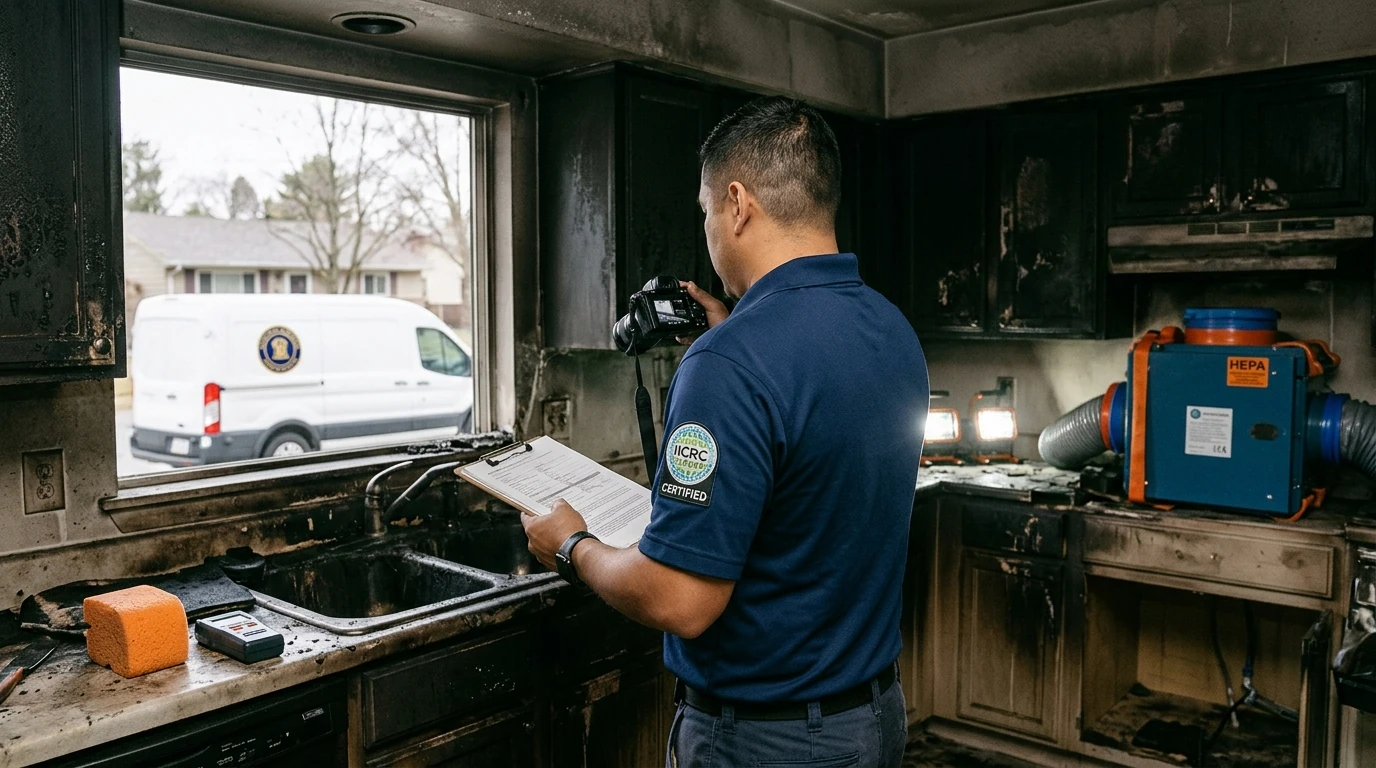
- Assessment and written scope documents soot penetration, structural char, and any water damage with moisture meters and photos.
- Water extraction and structural drying, if firefighting water got into the structure, dried to the ANSI/IICRC S500 water damage standard.
- Soot and smoke removal, using HEPA vacuuming, dry chemical sponges, and media blasting on hard surfaces, following the ANSI/IICRC S700 fire and smoke restoration standard.
- Odor removal, typically thermal fogging or hydroxyl/ozone treatment to neutralize smoke particles trapped in porous materials like drywall and insulation.
- Contents cleaning, pack-out, and storage for salvageable furniture, electronics, and textiles.
- Reconstruction, including drywall, flooring, cabinetry, and paint, once the structure has been cleaned and tested clear.
For a full walkthrough of each phase, see our guide to the fire damage restoration process.
What Should You Do First After a Fire in Santa Maria?
Wait for the fire department to formally clear the structure before re-entering, then call your insurance company and a restoration company the same day to get board-up service started before weather or secondary damage sets in. Coastal fog common across the Santa Maria Valley adds humidity that can push smoke odor deeper into drywall and insulation if a damaged structure sits open overnight, so speed matters here more than in drier inland climates.
Homeowners from Orcutt to Vandenberg Village deal with a mix of older wood-frame homes and newer stucco construction, and both absorb smoke differently, which is exactly why a written scope matters before any demolition starts. Call Coastal Restoration at (805) 345-7440 for a same-day assessment and a documented scope before any cleanup begins.
A fire loss is never just the burned room. Getting the smoke, soot, and water addressed together, on one documented timeline, is what keeps a six-figure rebuild from happening when a $10,000 cleanup would have done the job.
About Coastal Restoration
Coastal Restoration is an IICRC Certified Firm serving Santa Maria and the surrounding Central Coast, holding California contractor license #11245226. Their technicians carry WRT and ASD certifications and handle fire and smoke cleanup, contents restoration and storage, odor removal, emergency board-up and tarping, water damage restoration, mold remediation, and related services across the region, answering calls 24/7.