Emergency Smoke Damage Restoration in Santa Maria
Emergency smoke damage restoration in Santa Maria and surrounding areas. IICRC-certified, insurance billing accepted. Call (805) 345-7440.
Smoke damage emergency in Santa Maria? We answer 24/7, and the first 24 to 48 hours matter more with smoke than almost any other type of loss. Soot residue is acidic, and it doesn’t just sit on a surface, it etches into metal fixtures, yellows grout, and works its way into drywall pores and HVAC ductwork. The smell that seems manageable on day one often becomes a permanent part of the structure if the cleanup waits. Call (805) 345-7440 before you start wiping surfaces down yourself.
What smoke damage restoration actually involves
Smoke damage restoration is not the same job as fire damage reconstruction. It’s the cleanup, neutralization, and deodorization of residue left behind after a fire, whether that fire was in the structure itself or drifted in from a wildfire miles away. The work depends heavily on what kind of soot you’re dealing with. Protein soot from a kitchen fire is a thin, nearly invisible film that smells intensely and is tough to see until it’s already discolored cabinetry. Synthetic soot from burning plastics and furnishings is oily, smears easily, and spreads further through a home’s air handling system. Wildfire ash, common here given Santa Maria’s exposure to Central Coast wildfire seasons, tends to be drier and more alkaline, and it infiltrates through window gaps, attic vents, and return air ducts even when the fire itself never touched the property.
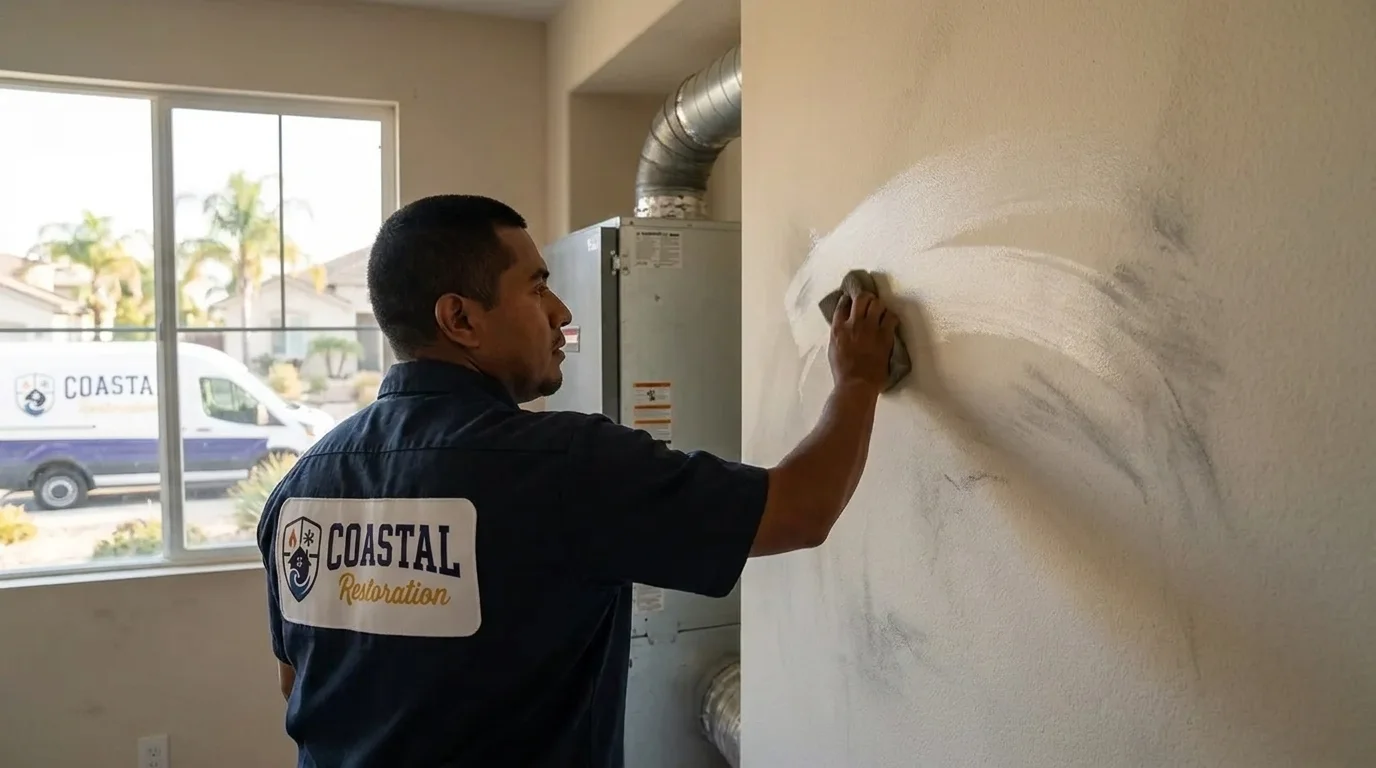
A real cleanup involves HEPA vacuuming of dry residue before any wet wiping (wiping first just grinds soot deeper into porous materials), ultra-low-volume fogging to carry deodorizing agents into the same air spaces the smoke penetrated, and in heavier cases, ozone or hydroxyl treatment to break down odor molecules rather than mask them. Hard surfaces get wet cleaning with appropriate agents matched to the soot type. Soft goods, upholstery, and HVAC components often need to be removed, cleaned off-site, or in some cases replaced.
Our process
- Soot and residue characterization. We identify whether you’re dealing with protein, synthetic, or wildfire ash residue, since the cleaning agents and approach differ for each.
- Source and HVAC containment. Ductwork and air handlers get isolated and inspected early, since a system that keeps circulating residue will undo cleaning work in other rooms.
- Dry and wet residue removal. HEPA vacuuming first, then wet cleaning of walls, ceilings, hard flooring, and fixtures with residue-appropriate solutions.
- Odor neutralization. Thermal fogging or ozone/hydroxyl treatment targets odor that has penetrated into drywall, subfloor, and framing, not just what’s visible on the surface.
- Contents evaluation and pack-out. Textiles, upholstery, and personal items that can be salvaged are cleaned ultrasonically or through specialized laundering; items beyond recovery are documented for your claim.
What separates a good smoke damage response from a bad one
The most common shortcut is treating odor as a masking problem instead of a residue problem. Spraying a deodorizer over soot that’s still embedded in a wall cavity will smell fine for a week and then come back once humidity shifts. A thorough response identifies where residue traveled, which almost always includes return air ducts, behind outlet covers, and inside cabinetry, not just the rooms where the fire or smoke was visible.
Another frequent miss is acid etching. Soot is acidic, and chrome fixtures, glass, and some metals can corrode within days if untreated. Adjusters increasingly look for documentation showing when cleaning began relative to the loss, because that window affects what’s classified as secondary damage versus original fire damage. A documented scope with pre- and post-treatment readings, photos of affected materials, and a clear timeline protects your claim and gives the adjuster what they need without back-and-forth.
What does smoke damage restoration cost?
Costs vary by the type of soot, how far it traveled through the HVAC system, and how long it sat before treatment began. Every loss gets a written scope before any work starts, so you know what’s included and why. Most homeowners insurance policies cover smoke damage restoration when the smoke originated from a covered fire event, including nearby wildfires in many policies, though coverage details depend on your specific policy language.
| Scenario | Typical range |
|---|---|
| Single room, light surface residue | $500 - $1,500 |
| Whole-room with odor penetration | $1,500 - $4,000 |
| Multi-room with HVAC contamination | $4,000 - $9,000 |
| Whole-house wildfire ash infiltration | $6,000 - $15,000 |
| Contents cleaning and pack-out (add-on) | $1,000 - $5,000 |
Seasonal & regional considerations
Santa Maria sits close enough to wildfire-prone hillsides and grassland that smoke infiltration from fires burning well outside city limits is a regular occurrence during late summer and fall, especially when Santa Lucia winds push smoke toward the valley. Homes here often have older HVAC systems or window designs that aren’t sealed tightly enough to keep ash out during these events. The marine layer that rolls in most mornings also adds humidity that can reactivate odor in residue that wasn’t fully neutralized, which is part of why thorough first-pass treatment matters more here than in a drier inland climate.
Service area
We handle smoke damage restoration throughout Santa Maria and the surrounding Central Coast, including Orcutt, Nipomo, Lompoc, and Guadalupe.
If smoke has settled into your home from a kitchen fire, a structure fire next door, or wildfire drift, the residue is actively working on your surfaces right now. Call (805) 345-7440 to begin smoke and soot removal before odor and etching become permanent.
Frequently Asked Questions
Does homeowners insurance cover smoke damage restoration?
What's the difference between protein soot and synthetic soot, and why does it matter?
How quickly does smoke residue cause permanent damage?
Will my HVAC system need to be cleaned after a smoke event?
Can wildfire smoke damage a home even if the fire never reached the property?
Looking for the best smoke damage restoration company in Santa Maria?
Coastal Restoration Services Inc provides licensed and insured smoke damage restoration in Santa Maria, CA and the surrounding area. Customers rate us 5.0 out of 5 stars across 29 Google reviews. We answer calls 24/7 — call (805) 345-7440 for immediate help.
Need Smoke Damage Restoration now?
We respond 24/7 across Santa Maria and surrounding CA cities.
Related Coverage
- Our Restoration Services
- Contact Coastal Restoration Services Inc
- Restoration Services in Arroyo Grande
- Restoration Services in Atascadero
- Restoration Services in Avila Beach
- Restoration Services in Ballard
- Restoration Services in Blacklake
- Restoration Services in Buellton
- Restoration Services in Callender
- Restoration Services in Cambria
- Restoration Services in Edna
- Restoration Services in El Paso de Robles
- Restoration Services in Grover Beach
- Restoration Services in Guadalupe
- The Fire Damage Restoration Process, Explained