TL;DR: For visible mold or a musty smell in a Santa Maria home, call a licensed mold remediation company first, not your insurance company and not a general contractor. A remediation crew can tell you on the phone whether you need lab testing before work starts, whether the water source is still active, and what containment looks like. Call Coastal Restoration Services Inc at (805) 345-7440 for a same-day assessment; the company is a 5.0-rated, IICRC Certified Firm answering 24/7.
If you just found a dark patch behind the washing machine in your Orcutt rental, or your Santa Maria Valley home still smells musty weeks after last winter’s roof leak dried up, you’re probably not sure who actually handles mold. A plumber fixes pipes. An inspector tests air and surfaces. A remediation company removes the growth and dries the structure. Here’s how to tell which call you need first, and in what order.
Who should I call first for mold in Santa Maria?
Call a licensed mold remediation company first if you can see or smell mold, and call a mold inspector first if you suspect mold but can’t find it. Both routes lead to the same place eventually: a remediation crew doing the actual removal and drying.
Coastal Restoration Services Inc is an IICRC Certified Firm licensed under California contractor license #11245226, and the company’s technicians can usually tell over the phone whether your situation needs air sampling before work starts or whether visible growth under 10 square feet can move straight to remediation under EPA mold remediation guidelines. That phone call is free and it’s the fastest way to stop guessing.
When is it a remediation call versus an inspection call versus a plumber?
It depends on whether you can see the mold, whether the water source is still active, and whether you need documentation for a transaction or dispute. Each of those points to a different first call.
Call a remediation company when you can see mold growth, smell a persistent musty odor, or just had water damage dry out without proper drying equipment. Santa Maria’s marine layer and older housing stock in neighborhoods like Orcutt and Vandenberg Village mean slow-drying crawl spaces and attics are common growth spots, even without an obvious flood.
Call a mold inspector first (independent of the remediation company) when you’re buying or selling a home and need a neutral third-party report, or when you have symptoms but no visible mold and want air or surface sampling before committing to remediation work. An inspection usually runs a few hundred dollars and gives you a lab-backed scope before any demolition happens.
Call a plumber or your water utility, not a restoration company, when the water is still actively leaking. Shut off the source first; mold removal on a wet, actively-flooding structure is wasted work. If there’s standing water near electrical panels or outlets, treat it as a safety issue and don’t enter the area until power is confirmed off.
Call your insurance company after mitigation starts, not before. Most policies require you to limit further damage, and a remediation company’s written scope and moisture-mapping documentation is what adjusters actually want to see. Read our full breakdown on who to call first for water damage if the mold traces back to a specific leak or flood event.
What happens when you call a mold remediation company in Santa Maria?
The first call is a short conversation about what you’re seeing, where, and for how long, followed by scheduling an in-person assessment, usually within the same day or next business day.
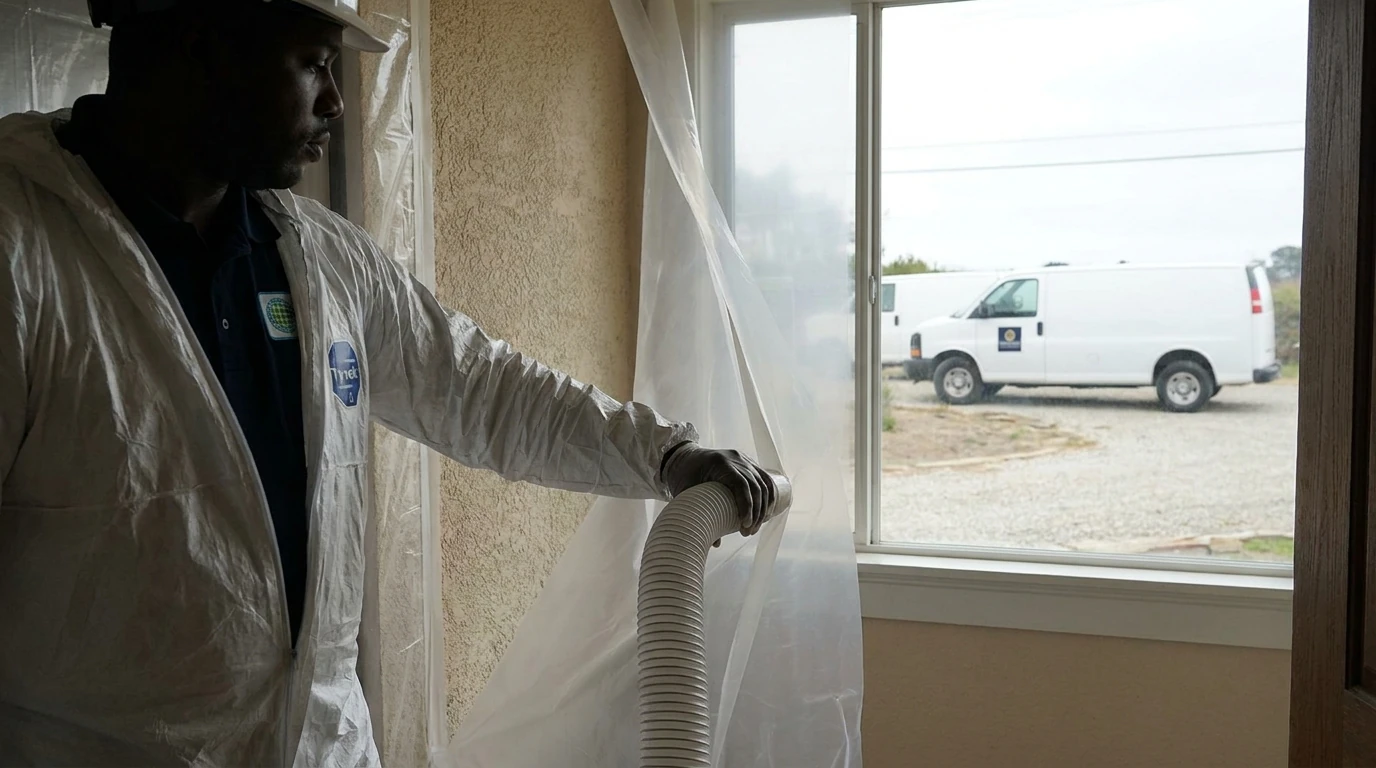
Have ready: the approximate square footage affected, whether the area has been wet recently, and any symptoms you or tenants have noticed. On arrival, a technician inspects visible growth, checks moisture levels with a meter in surrounding materials, and determines whether containment (poly sheeting, negative air pressure) is needed before any disturbance of the mold. For larger or ambiguous cases, they may recommend an IICRC S520-standard assessment with lab sampling before scoping the remediation work itself.
From there you get a written scope: what gets removed, what gets treated and dried, and an estimated timeline. Our mold remediation page walks through the containment and removal process in more detail, and our mold inspection and testing page covers what a standalone inspection includes if that’s the route you need first. If you’re still not sure what you’re looking at, this guide to black mold versus common surface mold is a useful gut-check before you call anyone.
What if I’m not sure it’s actually mold?
If you’re not sure, don’t wait for certainty before calling, because the longer growth sits, the more material it affects and the more it typically costs to remediate.
Common lookalikes include mineral deposits, dirt staining, and efflorescence on concrete, all of which can look similar to surface mold in a photo. Our guide to the 7 signs of hidden mold covers the smell, staining, and health cues that usually mean it’s worth a professional look rather than a wait-and-see approach. A phone call costs nothing; a few more weeks of hidden growth behind drywall usually costs more in materials replaced.
Call Coastal Restoration Services Inc at (805) 345-7440 for a same-day assessment, or request an estimate online if it’s not an urgent situation.
About Coastal Restoration Services Inc
Coastal Restoration Services Inc is an IICRC Certified Firm serving Santa Maria and the surrounding Central Coast, licensed under California contractor license #11245226. The company holds a 5.0 Google rating across 29 reviews and answers calls 24/7. Its technicians handle mold remediation and inspection alongside water, fire, storm, sewage, and biohazard restoration work across Santa Maria, Orcutt, Lompoc, Santa Ynez Valley, and San Luis Obispo County.