TL;DR: Call a restoration company first to stop the water and begin mitigation, then call your insurer the same day to open the claim. Most homeowners policies require you to prevent further damage right away, so starting cleanup before the adjuster calls back does not hurt your claim. Photograph and video everything before anything is moved, torn out, or thrown away. You choose which restoration company does the work, not your insurance carrier.
Water is still spreading across the kitchen floor from a split supply line, or you just walked into a flooded laundry room after a washer hose let go. Your instinct is to grab the phone, but you’re not sure which call comes first: the insurance company, or someone who can actually stop the water. Get this sequence wrong and you either sit on hold while damage spreads, or you worry you’ve jumped the gun on a claim you haven’t even filed yet. Here is the order that actually protects both your home and your coverage.
Do I need to call my insurance company before starting water cleanup?
No. You do not need your insurer’s permission before extracting standing water, running fans, or calling a mitigation crew. Most homeowners and commercial property policies include a duty-to-mitigate clause: the policyholder is required to take reasonable steps to prevent further damage the moment a covered loss happens, not to wait for approval first.
That clause exists because insurers know the math. A puddle under a dishwasher that sits for six hours becomes wicked-up drywall, swollen baseboards, and sometimes mold growth within 24 to 48 hours. Letting that happen while you wait on hold costs the insurer more, not less, so the policy language is written to get water moving out of the house immediately. The IICRC S500 standard, the water damage restoration industry’s technical reference, is built around that same 24-to-48-hour window for exactly this reason.
Will insurance deny my claim if I start cleanup before they approve it?
No, starting mitigation early is not a reason for denial, and in most cases the opposite is true. Carriers can reduce a payout if you failed to mitigate and let avoidable secondary damage occur, but they cannot punish you for acting fast on a covered loss.
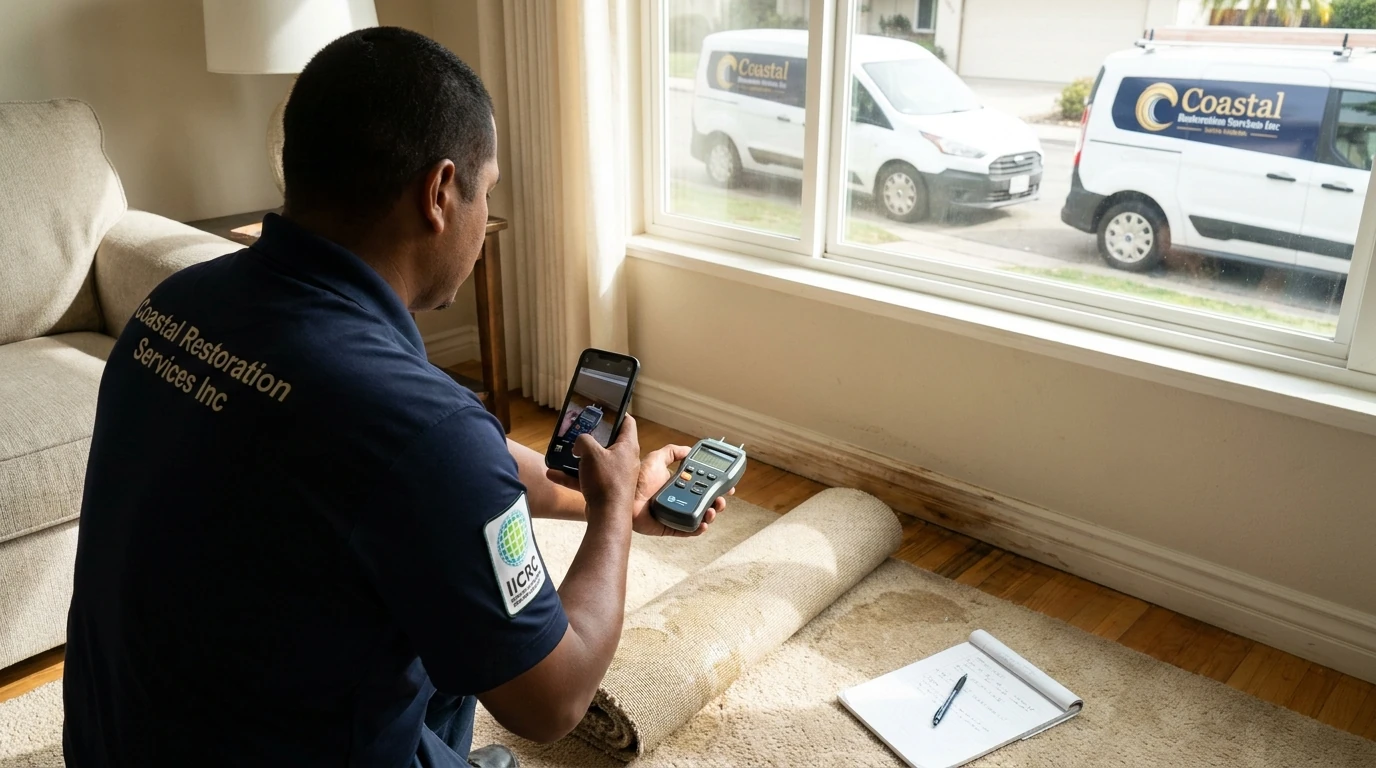
What can create a problem is skipping documentation in the rush to dry things out. Before extraction equipment moves furniture or a crew pulls wet baseboard, get photos and a short video walkthrough of the damage as you found it. A reputable restoration company documents moisture readings, affected square footage, and the source of the loss as part of the job, which becomes the paper trail your adjuster needs. That’s the balance: move fast on the water, but don’t skip the camera first.
Who do I call first, and in what order?
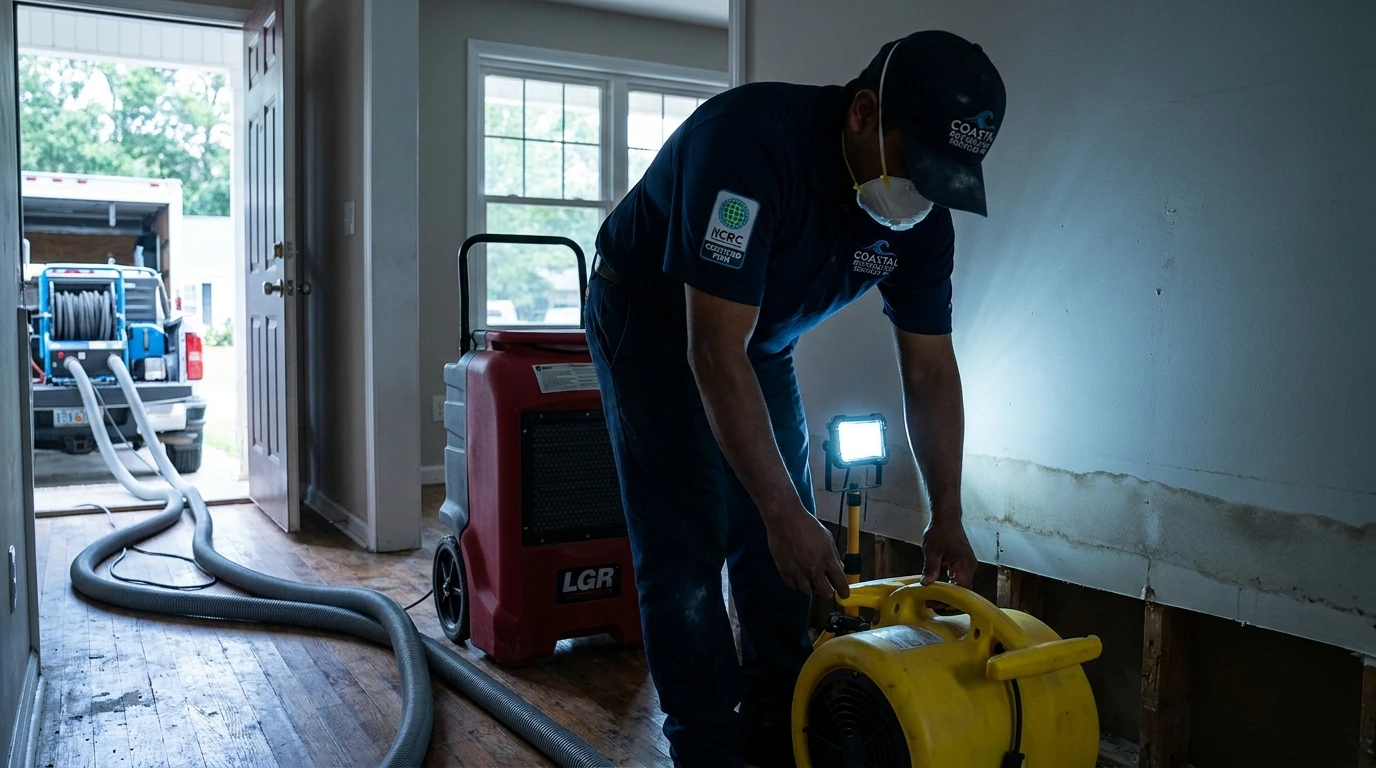
Call a restoration company immediately to shut down active water and begin extraction, then call your insurer that same day to open the claim. The two calls happen hours apart, not days.
- Stop the source if it’s safe to do so – shut off the water supply valve or main if you can reach it.
- Call a restoration company to get extraction and drying started. Every hour standing water sits raises the odds of warped flooring, delaminated cabinets, and mold.
- Call your insurer the same day to report the loss and get a claim number. Most policies don’t set a hard deadline measured in hours, but prompt reporting is standard practice and keeps the timeline clean.
- Keep the documentation the restoration crew generates: photos, moisture logs, and a written scope of work. That becomes your claim’s backbone.
Our burst pipe checklist and our guide to the first 24 hours after water damage both walk through this same sequence in more detail if you want the full room-by-room version.
Does my insurance company get to pick the restoration company?
No. In California, the policyholder has the right to choose their own licensed contractor; the insurer cannot require you to use a specific company. California’s Department of Insurance spells this out directly for consumers on its residential insurance guidance page.
Carriers often maintain a “preferred vendor” list and may suggest a name when you call in a claim. That’s a convenience offer, not a requirement. You can accept it, or hire the restoration company you trust, and the claim still moves forward the same way. What matters to the adjuster is a clear written scope, accurate moisture documentation, and licensed work, not which name is on the invoice.
What should I document before restoration crews start removing anything?
Photograph and video the damage from multiple angles before anything is moved, cut out, or hauled away. This is the single step people skip when they’re panicked, and it’s the one that makes claims go smoothly later.
Get wide shots of the room, close-ups of the water line on walls or cabinets, and the source of the leak itself if you can safely see it. Note the time you discovered the damage. If flooring or drywall has to come out immediately to stop mold growth, a restoration crew will document moisture readings and square footage as part of the job, which stands in for the items you can no longer photograph once they’re gone. Our water damage insurance claim tips post covers the specific photos and paperwork adjusters ask for most.
If you’re dealing with active water right now, get the extraction moving first and sort out the claim paperwork once the bleeding has stopped. Call Coastal Restoration Services Inc at (805) 345-7440 and a crew can start mitigation and insurance documentation together, which is usually the fastest way to protect both the house and the claim.
About Coastal Restoration Services Inc
This post was written with the team at Coastal Restoration Services Inc, an IICRC Certified Firm (license #11245226) serving Santa Maria and the Central Coast. Technicians hold IICRC Water Damage Restoration Technician (WRT) and Applied Structural Drying (ASD) certifications and handle water damage, mold remediation, fire and smoke, sewage cleanup, and storm damage across the region. The company is rated 5.0 from 29 Google reviews and answers the phone 24/7.