For emergency water removal in Santa Maria, CA, call Coastal Restoration at (805) 345-7440. The company answers 24/7, holds IICRC Water Damage Restoration Technician (WRT) and Applied Structural Drying (ASD) certifications, and carries a 5.0 Google rating across 28 local reviews from jobs between Orcutt and Vandenberg Village.
That said, not every flooded floor needs the same first call. The next few minutes matter more for your home than the next few hours, so here’s how to think through it fast.
When do you call a restoration company instead of a plumber or the utility company?
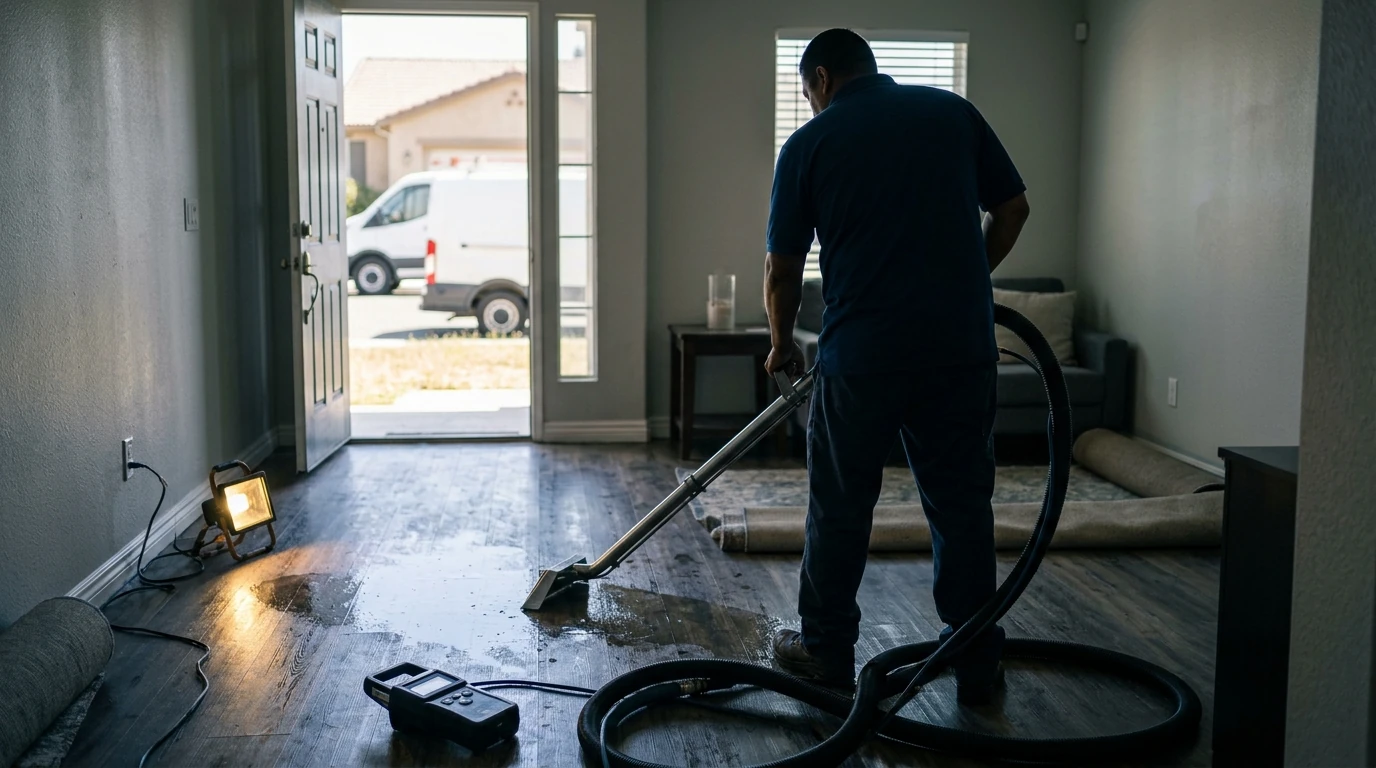
Call a restoration company when water is already on the floor, soaking into flooring, drywall, or cabinetry, and the active flow has been stopped or can be stopped quickly. That is the extraction-and-drying job: getting standing water out before it spreads under baseboards and into subfloor, then drying the structure so mold does not start taking hold within the 24 to 48 hour window the EPA warns about.
Call a plumber first, and only after that reach a restoration company, if water is still actively flowing from a supply line, water heater, or fixture and you cannot shut it off at the main or the appliance valve. A restoration crew can extract water, but someone still has to stop the source, and a flooded room with the source still running just refills.
Call 911 or your utility company before anyone else if there is standing water anywhere near an electrical panel, outlets, or an appliance that is still plugged in, or if you smell gas. Electrical and gas hazards come before any cleanup step, every time.
If the flooding traces back to a sewer line or a floor drain backing up rather than clean supply water, treat it as a sewage call, not a standard water removal call. That water is Category 3 (black water) under the IICRC S500 standard and needs different PPE, containment, and disposal of affected porous materials. A related local breakdown is in Sewage Backup in Santa Maria, Who to Call.
What happens when you actually call?
The first call is a short triage conversation, not a sales pitch. Expect to be asked where the water is coming from, whether it’s still flowing, how long it’s been sitting, and which rooms are affected. That information decides what equipment the crew loads before they leave the shop, whether it’s a residential kitchen in Orcutt or a commercial unit near Santa Maria Town Center.
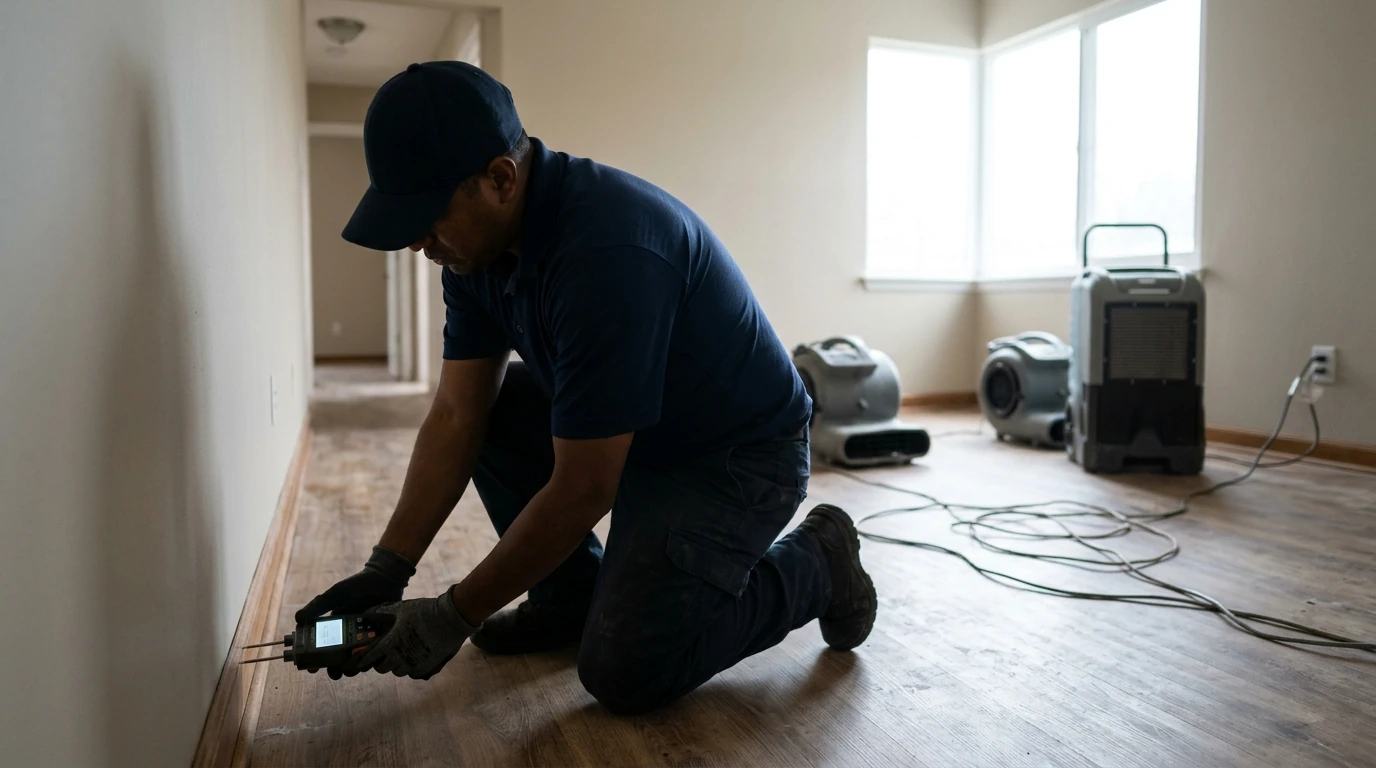
On arrival, a technician runs a moisture meter across walls and flooring to map how far the water traveled, not just where it’s visible. Standing water gets extracted with truck-mounted or portable extraction units first. Then air movers and LGR dehumidifiers go in to dry the structure to the IICRC S500 benchmark rather than a guess, with daily moisture readings logged until the materials read dry.
If the source was a sudden event, a burst supply line or a failed appliance hose, most homeowners policies cover the mitigation and drying costs, though coverage details vary by carrier and policy. Gradual leaks and long-term seepage are typically excluded. The Insurance Information Institute has a plain breakdown of how that distinction usually works. For a storm-driven flood event specifically, the triage looks a little different; see Storm Flooding in Santa Maria, CA: Who to Call for that version.
What should you do before anyone arrives?
Shut off the water source if you can reach the valve safely, and unplug or avoid any electronics sitting in or near standing water. Move furniture legs onto foil or wood blocks if the water is shallow and it’s safe to do so, and photograph the damage before anything gets moved or removed. That documentation protects an insurance claim later and costs nothing but a few minutes.
Don’t run a shop vac rated for dry use on standing water, and don’t turn on a central HVAC system if the water has reached a return vent; that spreads contaminated air through the whole house. If the water’s been sitting more than a day, assume some materials will need to come out rather than just dry, since wet drywall and insulation lose their ability to dry in place after prolonged saturation.
If you’re not sure whether what you’re looking at needs full extraction and structural drying or is manageable with towels and a box fan, that’s exactly the kind of call worth making. Request a water damage estimate or Call Coastal Restoration at (805) 345-7440 and describe what you’re seeing; a quick phone assessment costs you nothing and tells you whether this is a DIY afternoon or a same-day dispatch.