Property damage doesn’t check a calendar before it happens. A pipe fails, a storm rolls through, a tenant moves out and leaves a mess, and it’s a Saturday. What happens next, and how fast someone with the right training shows up, often decides how big or small the eventual repair bill gets.
One Coastal Restoration Services customer, George, ran into exactly that kind of weekend situation. Here’s what he had to say about it:
Yes i highly recommend. Coastal rushed to the scene on the weekend and promptly provided valued feedback. We were able to move forward with our situation forthwith. Very satisfied with outcome.
George, verified Google review
That’s a short review, but it packs in three things that actually matter in this industry: a weekend response, a fast and useful assessment, and a clear outcome. Here’s what each of those looks like in practice.
What does “rushed to the scene on the weekend” actually involve?
A weekend response means a technician is dispatched and on-site the same day the call comes in, not queued for the next business day. That matters because most types of property damage keep getting worse the longer they sit untouched.
Water intrusion is the clearest example. Drywall, subfloor, and framing start absorbing moisture within minutes, and mold can begin colonizing damp material within 24 to 48 hours under the right conditions, according to guidance from the EPA. Weekend delays aren’t just an inconvenience; they’re the difference between a job that stays contained and one that spreads into adjoining rooms or floors.
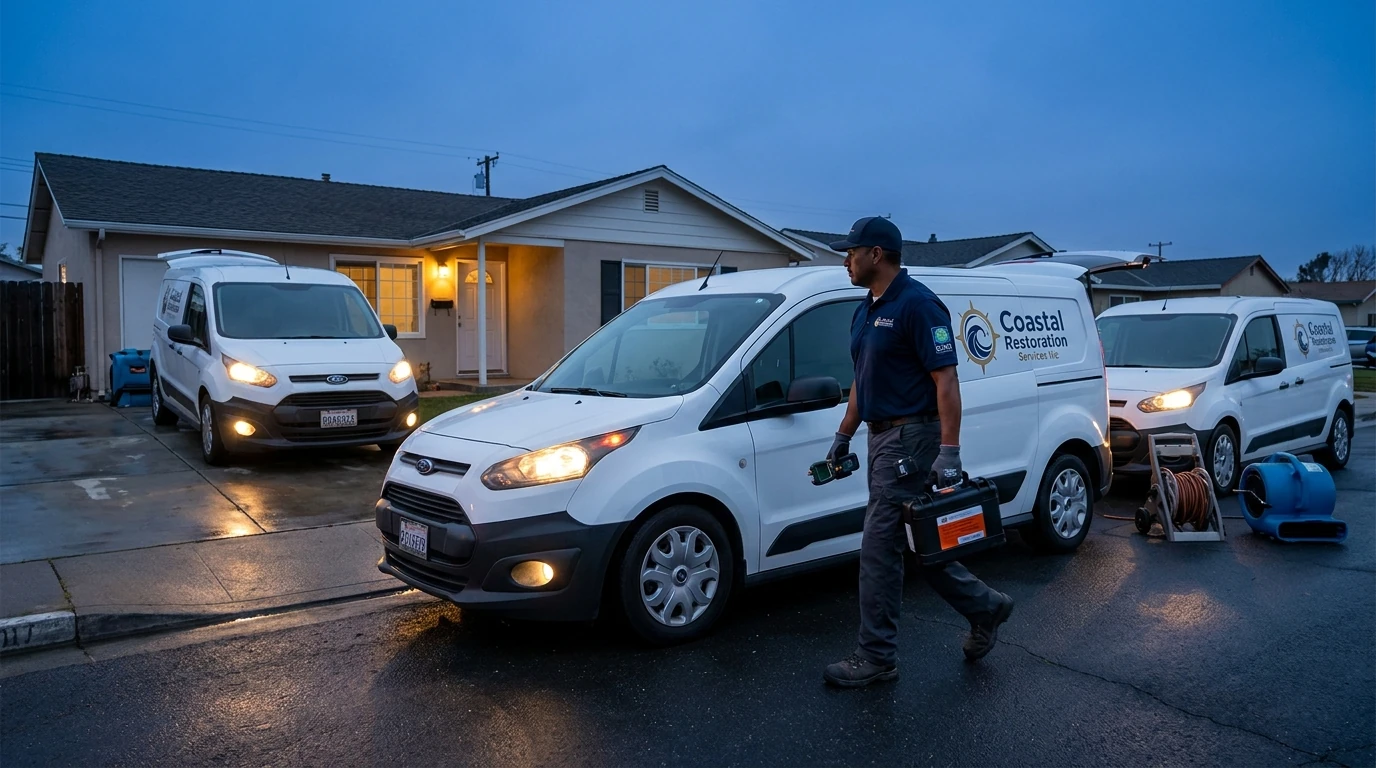
Coordinating a weekend or after-hours call takes real logistics behind the scenes: a technician on call, a vehicle stocked and ready, and a dispatcher who can get a crew moving without waiting for Monday morning. George’s review reads like that system worked the way it’s supposed to.
What does a good initial assessment on arrival actually cover?
A useful first assessment gives the property owner two things immediately: a clear read on what’s damaged, and a plan for what happens next. George called this “valued feedback,” and in restoration work that feedback usually comes from a structured walkthrough, not a guess.
A technician walking a fresh loss typically checks moisture content in affected materials with a penetrating or non-penetrating meter, documents the extent of the damage with photos, and identifies whether the source of the problem has been stopped. For water losses specifically, the technician also classifies the water (clean, gray, or Category 3 “black water”) because that classification drives both the safety protocol and what can realistically be saved, per the IICRC S500 standard.
That documentation isn’t just for the crew’s own use. It becomes the backbone of the insurance claim, giving the adjuster a dated, photographed record of the damage before any material gets removed. Homeowners who want a deeper walkthrough of that documentation step can see our water damage insurance claim tips for the kind of paperwork this stage typically generates.
Why does moving “forthwith” matter once the assessment is done?
Moving quickly after the assessment matters because the gap between diagnosis and action is where secondary damage happens. A clear scope means equipment and labor can start the same visit instead of waiting on a callback.
Once a technician knows what they’re dealing with, whether that’s standing water, smoke residue, or a contamination issue, the next step is usually mobilizing the right equipment: extraction units, air movers, dehumidifiers, or containment barriers, depending on the loss. George’s phrase “move forward with our situation forthwith” suggests that transition from assessment to action didn’t stall out waiting on approvals or scheduling gaps.
That speed also has a practical insurance angle. Most carriers expect the policyholder to take reasonable steps to prevent further damage once a loss occurs. A same-day scope and mitigation start gives homeowners a documented timeline that supports the claim rather than leaving a question mark about why nothing happened for a week.
What does a “satisfied outcome” mean in restoration terms?
A satisfied outcome usually means the property is verified dry, clean, or repaired, and the customer isn’t left guessing whether the job is actually finished. That’s different from just packing up equipment and leaving.
On a drying job, that verification typically means moisture readings back at or near the material’s normal dry standard, confirmed with the same meter used at intake so the numbers are comparable. On a cleaning or remediation job, it means a final walkthrough where the technician points out what was done, what was replaced, and what to watch for going forward. Customers who want to see the full arc of a typical drying job can read our step-by-step breakdown of the water damage restoration process.
George’s five-star review and the phrase “very satisfied with outcome” line up with that kind of closed-loop finish: a problem that got addressed, verified, and resolved, not just tackled halfway.
If you’re dealing with sudden property damage over a weekend or after hours, don’t wait until Monday to make the call. A same-day scope and a documented plan protect both your property and your insurance claim. Reach Coastal Restoration Services Inc at (805) 345-7440 to get a technician started on an assessment.
FAQ
What counts as a weekend restoration emergency?
Any sudden property damage, water intrusion, storm impact, fire or smoke exposure, or a biohazard situation, that will get measurably worse if it sits untouched until the next business day. Active water sources and contamination issues are the clearest examples where waiting isn’t a safe option.
Should I call my insurance company or a restoration company first?
In most cases, get the mitigation started first, then notify your insurer. Most policies expect the homeowner to take reasonable steps to prevent further damage, and a documented same-day scope from the restoration crew gives the adjuster a clear, dated record to work from.
What should I have ready when I call for an emergency assessment?
Know the general location and type of damage if you can (a leaking pipe, a roof issue, smoke damage), whether the source has been shut off, and your property address. Photos taken on your phone before the crew arrives are a helpful backup to the technician’s own documentation.
How is a weekend assessment different from a scheduled inspection?
The assessment itself covers the same ground, moisture readings, photo documentation, and a scope of work, but it happens under time pressure, often the same day the damage occurs, rather than at a pre-scheduled appointment.