TL;DR: A leaking water heater in Santa Maria needs two calls, not one. A licensed plumber stops the leak at the source, and a restoration company extracts the water and starts drying the structure within hours. Shut off the cold water supply line and cut power or gas to the unit first. Standing water left more than a day or two risks mold growth and warped flooring, and most homeowners policies cover a sudden tank failure but not a leak caused by years of slow corrosion.
If you just found water pooling around your water heater in Santa Maria, whether it’s spreading across the garage slab or seeping under a hallway closet door, the next ten minutes matter more than anything else you do today. A residential tank holds 40 to 50 gallons under pressure, and a ruptured tank or a failed fitting can put that much water into your home fast. Shutting it down is simple. Knowing who to call next is what keeps a bad afternoon from turning into a mold problem next month.
What should you do in the first 60 seconds?
Shut off the cold water supply valve at the top of the tank, then cut power to the unit, electric breaker or gas valve, before you touch anything wet.
The water supply valve sits on the cold-water line feeding the tank, usually a simple lever or round handle, and turning it clockwise (or perpendicular to the pipe for a lever valve) stops new water from entering. On a gas unit, turn the gas control knob to off. On an electric unit, go to the breaker panel and flip the breaker labeled for the water heater, and never approach a panel if you’re standing in water. If outlets or the panel itself look wet, skip it and wait for a professional.
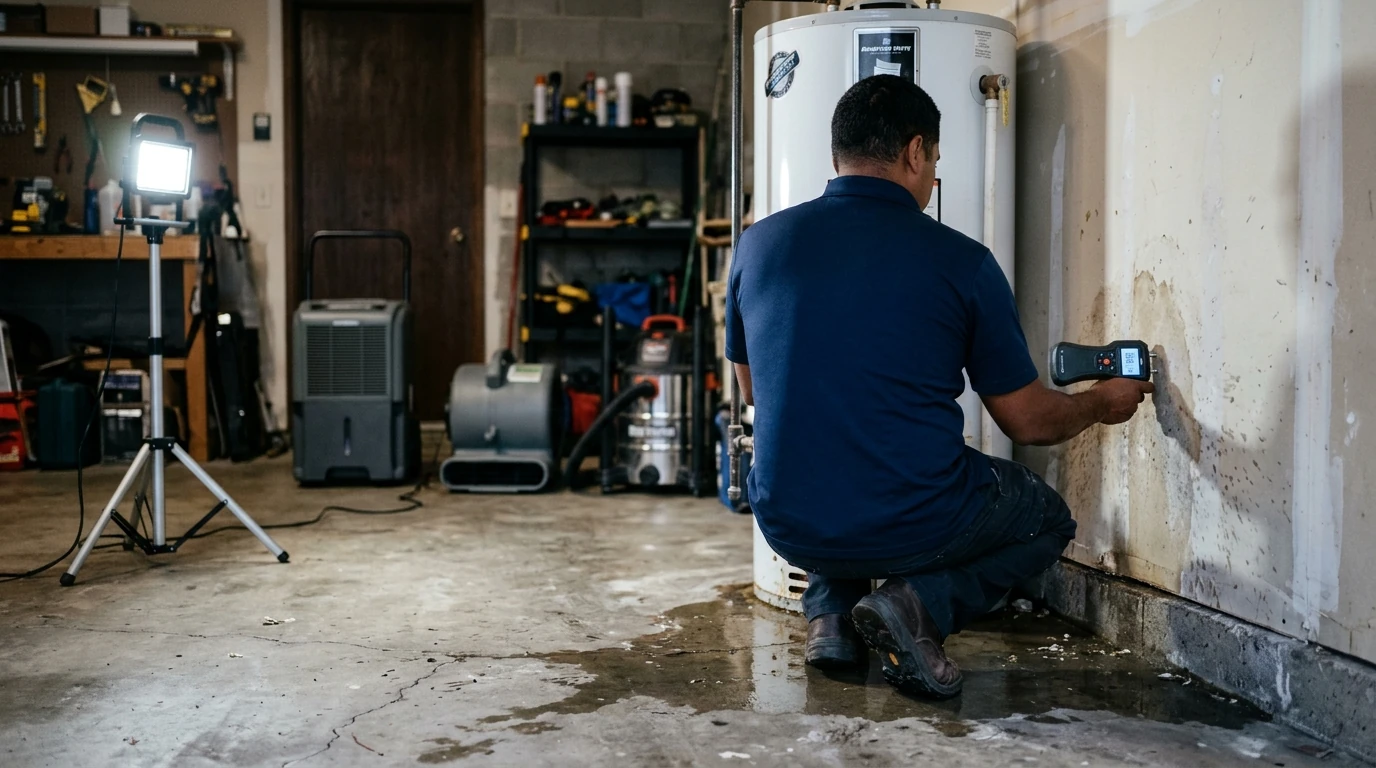
Where the unit sits changes how fast damage spreads. A garage-mounted tank on a bare slab usually pools toward the garage door or a floor drain, which buys you a little time. A water heater in an interior closet, common in many Santa Maria tract homes, sits closer to drywall, baseboards, and flooring, so water can wick into wall cavities within the hour. Either way, grab towels for standing water and move anything stored nearby off the floor.
Who do you call first, a plumber or a restoration company?
Call both. A licensed plumber stops the leak at the source, and a restoration company starts removing water and drying the structure, because the mold clock starts within 24 to 48 hours whether or not the plumbing is fixed yet.
These are two different jobs. The plumber diagnoses whether you’re dealing with a cracked tank (replacement, not repair) or a failed fitting, valve, or drain line (often repairable), and gets the unit squared away or hauled out. That part doesn’t touch the water already sitting in your garage, closet, or the drywall it soaked into.
That’s the restoration half, and it’s the one that determines whether this stays a one-day cleanup or turns into a mold remediation job. Coastal Restoration handles water extraction, moisture mapping, and structural drying for Santa Maria, Orcutt, and Vandenberg Village homeowners, and answers the phone 24/7. If a leak has already caused damage, call Coastal Restoration at (805) 345-7440 while the plumber is still en route, there’s no reason to wait for one call to finish before making the other. If you’ve dealt with a burst supply line before, the response looks a lot like our burst pipe guide for Santa Maria, the main difference is where the water originates.
What happens in the first 24 to 48 hours after a water heater leak?
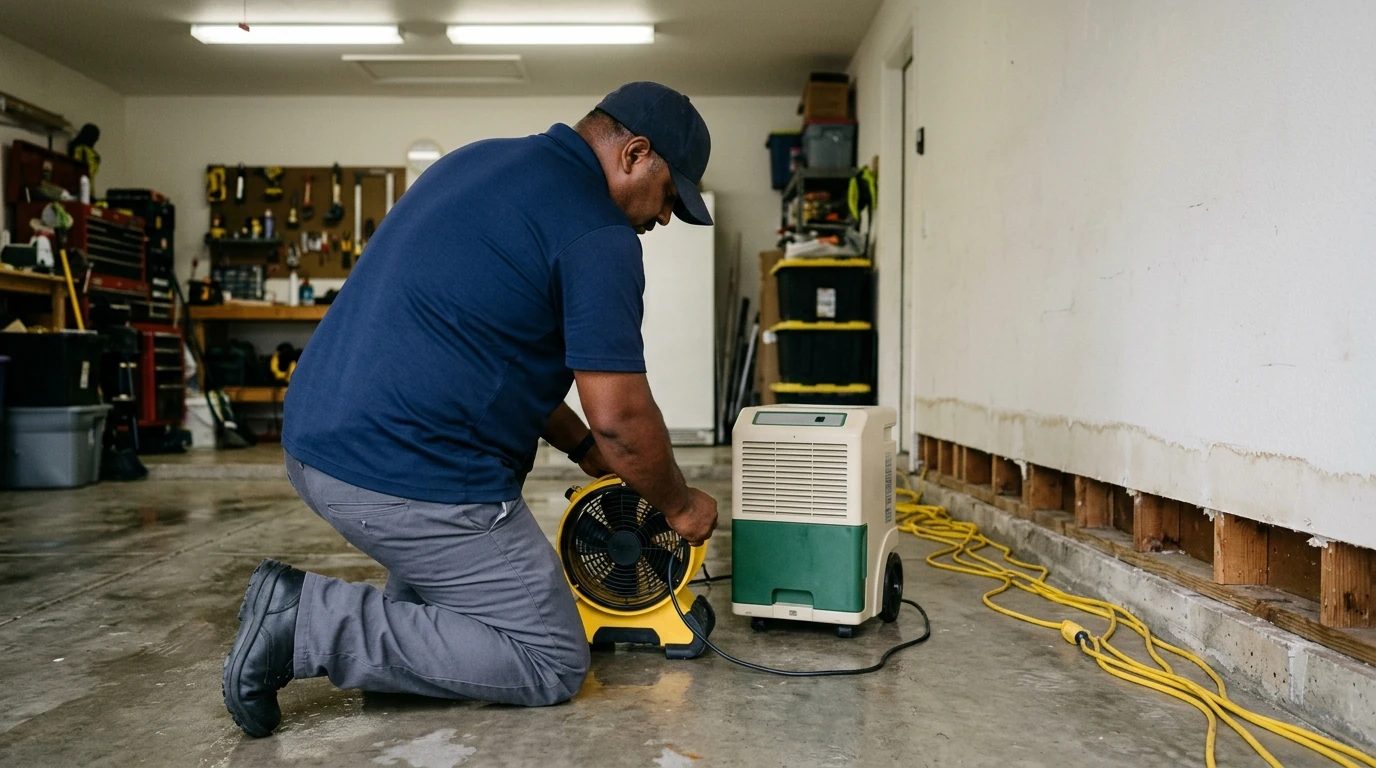
A technician maps the wet areas with a moisture meter, extracts standing water, and sets dehumidifiers and air movers to dry the structure to a verified dry standard, usually over 3 to 5 days.
The first visit documents what’s actually wet, not just what’s visibly damp. Water travels under flooring and behind baseboards further than it looks, so the moisture readings matter more than the puddle on the floor. If drywall, baseboard, or flooring material can’t be dried in place, it comes out at this stage rather than later, once it’s already growing something. Drying follows the ANSI/IICRC S500 standard for professional water damage restoration, and equipment typically stays in place until follow-up readings confirm the materials are back to a normal moisture range.
Timing matters because mold can begin growing on wet materials within 24 to 48 hours, according to the EPA’s guidance on mold and moisture. That window is also why calling the restoration side the same day as the plumber, rather than after the tank is replaced, protects you from a second, more expensive problem.
Does homeowners insurance cover a water heater leak in Santa Maria?
Most homeowners policies cover sudden, accidental water damage, like a tank that ruptures without warning, but exclude damage from a leak that developed gradually from rust or wear over time.
An adjuster will usually ask how long the leak had been happening. A tank that fails overnight with no prior signs typically falls under the sudden-and-accidental language most policies use. A tank that’s been seeping slowly for months, with staining or a slow drip the homeowner knew about, often gets treated as a maintenance issue the policy doesn’t cover. Photograph the damage and the failed unit before cleanup starts, and keep any plumber’s invoice describing the failure, since that documentation is what supports the claim. The California Department of Insurance’s residential claims guides walk through how the claims process works in more detail, and our own water damage insurance claim tips covers what to document before anyone starts tearing out drywall.
Once the water’s shut off and both calls are made, the rest is paperwork and patience. Document the damage with your phone before you move anything, keep the plumber’s invoice, and let the drying equipment run its course rather than pulling it early because the floor feels dry to the touch.
About Coastal Restoration
Coastal Restoration is an IICRC Certified Firm serving Santa Maria, CA and the surrounding Central Coast, licensed by the California Contractors State License Board (CSLB #11245226). Their technicians hold IICRC WRT and ASD credentials and handle water damage restoration, mold remediation, fire and smoke damage restoration, sewage cleanup, storm damage restoration, and crawl space encapsulation across the region, answering the phone 24/7.
Video Transcript
Found water pooling around your water heater in Santa Maria, maybe in the garage or seeping under a closet door? The next ten minutes matter more than anything else you do today. First, shut off the cold water supply valve at the top of the tank to stop new water from entering. Next, cut the power at the breaker or turn off the gas valve, but never touch a wet electrical panel. A garage water heater pools slowly toward the floor drain, while a closet unit can soak drywall within the hour. A leaking water heater needs two calls, not one phone call: a licensed plumber and a restoration company, both right away. Your plumber diagnoses the tank, repairs or replaces it, but that doesn’t touch the water already soaking your floors. A restoration team extracts standing water, maps hidden moisture, and sets drying equipment to protect your home’s structure. Mold can start growing within 24 to 48 hours, so calling early protects you from a second, costlier problem. Most homeowners policies cover a sudden tank failure, but not a leak caused by slow corrosion, so photograph the damage before cleanup begins. Call Coastal Restoration at (805) 345-7440 to schedule an assessment.