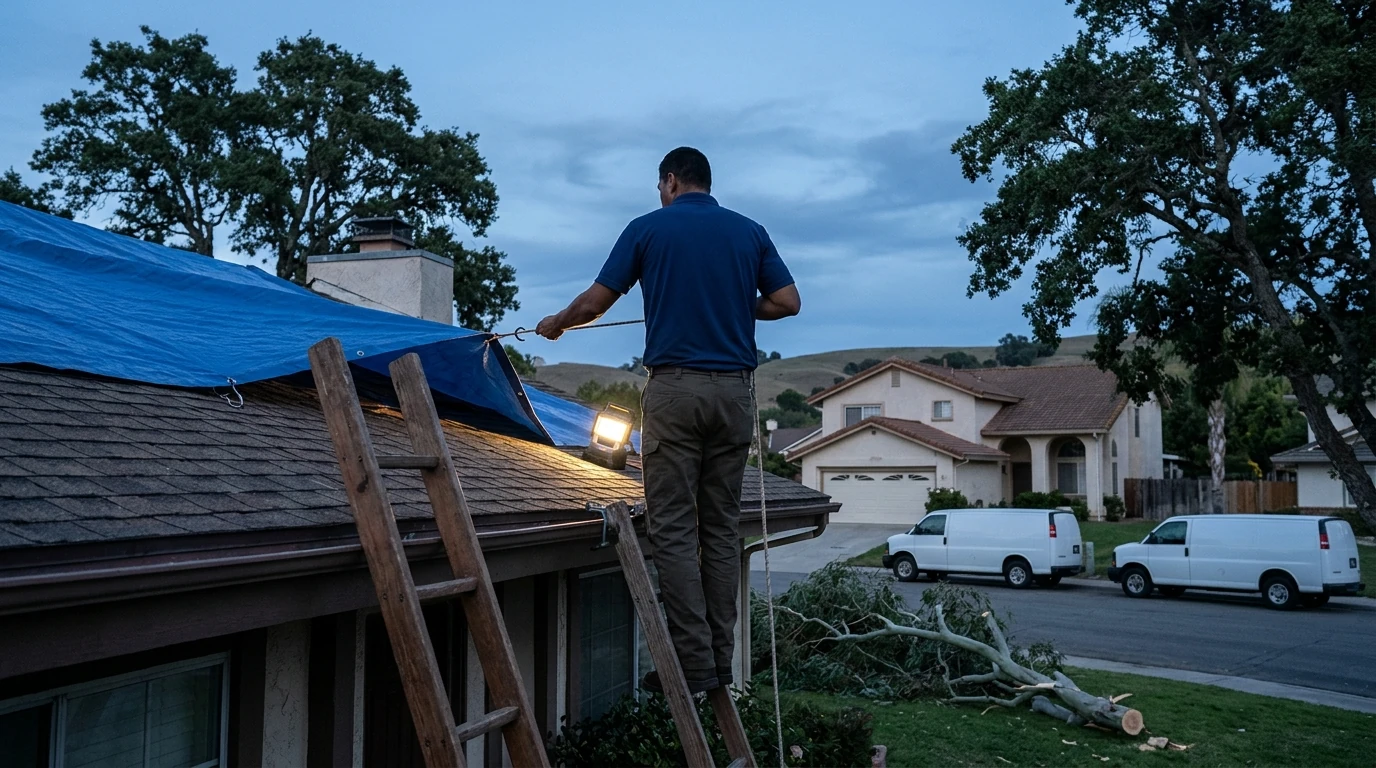
A eucalyptus limb just split across your roofline during a Central Coast wind event, and rainwater is already finding its way into the attic insulation. For tree damage to a home in Santa Maria, call Coastal Restoration at (805) 345-7440; the company answers the phone 24/7 and handles the emergency tarp, board-up, and water extraction once the tree itself is off the structure.
But the restoration company is not always the first call. Depending on what’s on your roof right now, you may need 911, a tree removal crew, or a restoration crew, in that order. Here’s how to sort it out fast.
Is Anyone Hurt, or Is a Power Line Down? Call 911 First
If anyone is injured, trapped, or a power line is tangled in the downed branches, call 911 before calling anyone else. Downed lines stay live even when the power looks out, and a limb resting on a service drop can re-energize without warning.
If you smell gas, hear arcing, or see a sparking line near the tree, get everyone clear of the house and yard and wait for the fire department and utility crew to clear the scene. Don’t try to cut, move, or even touch a branch that’s in contact with any wire.
Once the property is confirmed safe, utility crews and fire personnel will tell you when it’s okay for other trades to get close to the structure.
Tree Still Resting on the Roof? Here’s the Right Order of Calls
After the scene is safe, call a licensed tree removal or arborist crew first to cut and remove the tree itself; call a restoration company next to tarp the opening and start drying the structure. A restoration crew generally should not attempt to move large limbs that are still under tension or wedged into framing, that’s a chainsaw-and-rigging job.
These are two different trades with two different jobs. The tree crew brings chainsaws, rigging, and sometimes a crane or bucket truck to get the wood off your roof safely without doing more damage to the framing underneath. The restoration crew brings tarps, plywood, extraction equipment, and drying gear to close up the hole the tree left behind and deal with whatever moisture got inside.
Santa Maria’s older neighborhoods, and stretches of Orcutt and Vandenberg Village with mature eucalyptus and oak canopy, see this exact sequence of calls most often during the gusty winter storm pattern that typically runs from November through March. If a branch only grazed the gutter or fascia with no structural penetration, you may be able to skip the tree crew and go straight to a storm damage restoration assessment.
What Does a Restoration Crew Actually Do Once the Tree Is Off the Roof?
Once the tree is removed, a restoration crew’s first job is to stop more water from getting in, the actual repair comes later through your roofer or a general contractor. The sequence usually looks like this:
- Temporary tarp or plywood board-up over the opening, sized to shed water even in gusty conditions.
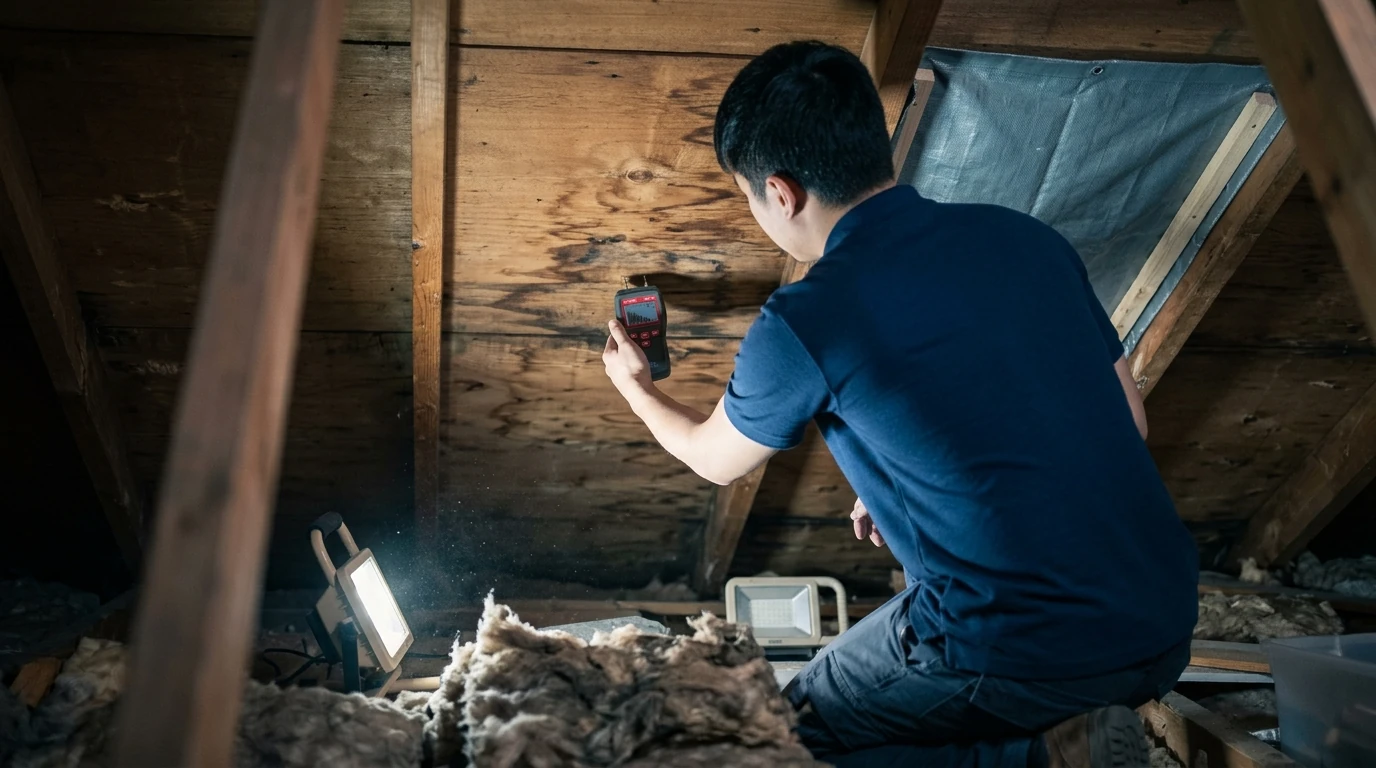
- Moisture mapping of the attic, ceiling, and any affected rooms below, using a moisture meter to find out how far the water traveled.
- Photo documentation of the hole, the interior damage, and the debris before anything is moved, which matters for your claim.
- Extraction and structural drying if water reached insulation, drywall, or framing, following the IICRC S500 standard for water damage restoration.
- Coordination with your roofer and insurance adjuster so the permanent repair picks up where the emergency mitigation left off.
If water already soaked into ceiling drywall or insulation before the tarp went up, that’s a separate water damage restoration scope, not just a roof patch. A related situation, heavy rain finding an existing weak point rather than a tree strike, is covered in our post on storm flooding in Santa Maria.
Will Homeowners Insurance Pay for Tree Damage in Santa Maria?
Most standard homeowners policies cover sudden damage to your home from a falling tree, even if the tree came from a neighbor’s yard, because the loss is treated as a covered “falling object” event rather than a dispute over whose tree it was. Coverage for removing the tree itself is often capped at a separate, smaller limit, and a tree that falls in the yard without hitting a covered structure may not be covered to remove at all. Check your own policy language, since limits and exclusions vary by carrier (see the Insurance Information Institute’s guide to disaster coverage).
Document everything before the tree crew shows up if you safely can: wide shots of the tree on the structure, close-ups of the hole, and anything damaged inside. Photos taken before removal and before tarping are some of the strongest evidence in a claim.
Once the roof is tarped and drying is underway, your insurer will usually want a written scope of the mitigation work and photos of the moisture readings, not just an invoice.
If a tree has come down on your Santa Maria home, get the tree crew moving first, then request an emergency tarp and water damage assessment so the structure gets closed up before the next system rolls through.
About Coastal Restoration
This post was written with the Coastal Restoration team. Coastal Restoration is an IICRC Certified Firm (CSLB license #11245226) serving Santa Maria and the surrounding Central Coast, including Orcutt, Lompoc, and Vandenberg Village. Its technicians hold IICRC Water Damage Restoration Technician (WRT) and Applied Structural Drying (ASD) credentials and handle storm damage, emergency board-up and tarping, and water damage restoration across the region, answering calls 24/7.
Need help now? Call Coastal Restoration at (805) 345-7440.