TL;DR: In Santa Maria, CA, emergency water removal typically costs $350 to $800 for a single room with clean water, $1,200 to $5,500 for a multi-room or whole-floor flood, and $4,000 to $9,000 or more for sewage or storm-driven black water. The biggest cost drivers are water category, square footage affected, and how many hours passed before extraction started. Homeowners insurance often covers sudden, accidental water loss but not flood or long-term leaks, so documentation matters.
If a water heater let go overnight in your Orcutt or Santa Maria home and you’re standing in an inch of water on the tile wondering what this is going to cost before anyone even shows up with a hose, you’re not alone, and the number depends on a few specific things, not guesswork. Here’s the real range homeowners across the Central Coast pay for emergency water removal, what moves it up or down, and what your insurance is likely to pick up.
How Much Does Emergency Water Removal Cost in Santa Maria, CA?
Most emergency water removal jobs in Santa Barbara County run between $350 and $5,500, with small single-room jobs at the low end and multi-room or contaminated-water losses at the high end. The final number depends on how much water there is, what kind of water it is, and how fast it gets pulled.
| Scenario | Typical Cost Range |
|---|---|
| Single room, clean water (Cat 1), under 300 sq ft | $350 - $800 |
| Whole-floor extraction, clean to gray water | $1,200 - $2,800 |
| Multi-room flood, gray water, furniture or contents affected | $2,500 - $5,500 |
| Black water extraction (sewage backup, storm surge) | $4,000 - $9,000+ |
| Crawl space or basement standing water | $1,000 - $3,500 |
| Structural drying add-on (air movers, dehumidifiers, per day) | $150 - $450/day |
These are typical industry figures for the region, not a quote. Every loss is different, and Coastal Restoration provides a written scope before any work begins so you know the number before equipment goes in.
What Factors Drive the Cost of Emergency Water Removal?
The water’s category under the ANSI/IICRC S500 standard is the single biggest factor. Clean water from a supply line costs far less to handle than gray water from an appliance or black water from a sewer backup, because contaminated water requires more removal of porous material and antimicrobial treatment, not just drying.
Square footage and response time matter almost as much. Water that sits for 24 to 48 hours starts wicking into drywall, baseboards, and subfloor, which turns a same-day extraction into a multi-day drying job with daily equipment rental. Materials matter too: hardwood and engineered flooring in many older Santa Maria and Orcutt homes often need to come up entirely, while tile and concrete slab can sometimes be dried in place.
Accessibility adds cost on its own. A flooded crawl space or a basement with limited access takes longer to extract and dry than an open living room, and multi-story homes need water tracked down through ceilings and walls before drying equipment gets placed correctly.
Does Insurance Cover Emergency Water Removal in Santa Maria?
Most homeowners policies cover water removal when the damage is sudden and accidental, such as a burst supply line or a failed appliance hose, but they generally exclude gradual leaks, flood water, and sewer or sump pump backups unless you carry a separate endorsement. Reading your policy’s water damage section before you need it saves confusion later.
Flood water, meaning water that enters from outside the home such as rising groundwater or overflowing storm drains, is not covered by a standard homeowners policy at all. That requires a separate flood policy through the National Flood Insurance Program or a private flood carrier. Sewer and drain backups, and sump pump failures, also need a specific water backup endorsement added to the policy, something the Insurance Information Institute explains in more detail.
Homeowners also have a duty to mitigate damage once it starts, meaning stopping the water source and beginning extraction promptly protects the claim rather than hurting it. Photographing the damage before extraction starts, and keeping every receipt, is what adjusters ask for first. Our guide on water damage insurance claim tips covers the documentation steps in more detail, and our broader water damage restoration cost guide breaks down where extraction fits into a full restoration budget.
What Happens During an Emergency Water Removal Job?
A typical emergency water removal call follows the same sequence regardless of the source:
- Initial call and triage. The source of water gets identified and, if possible, shut off before a crew arrives.
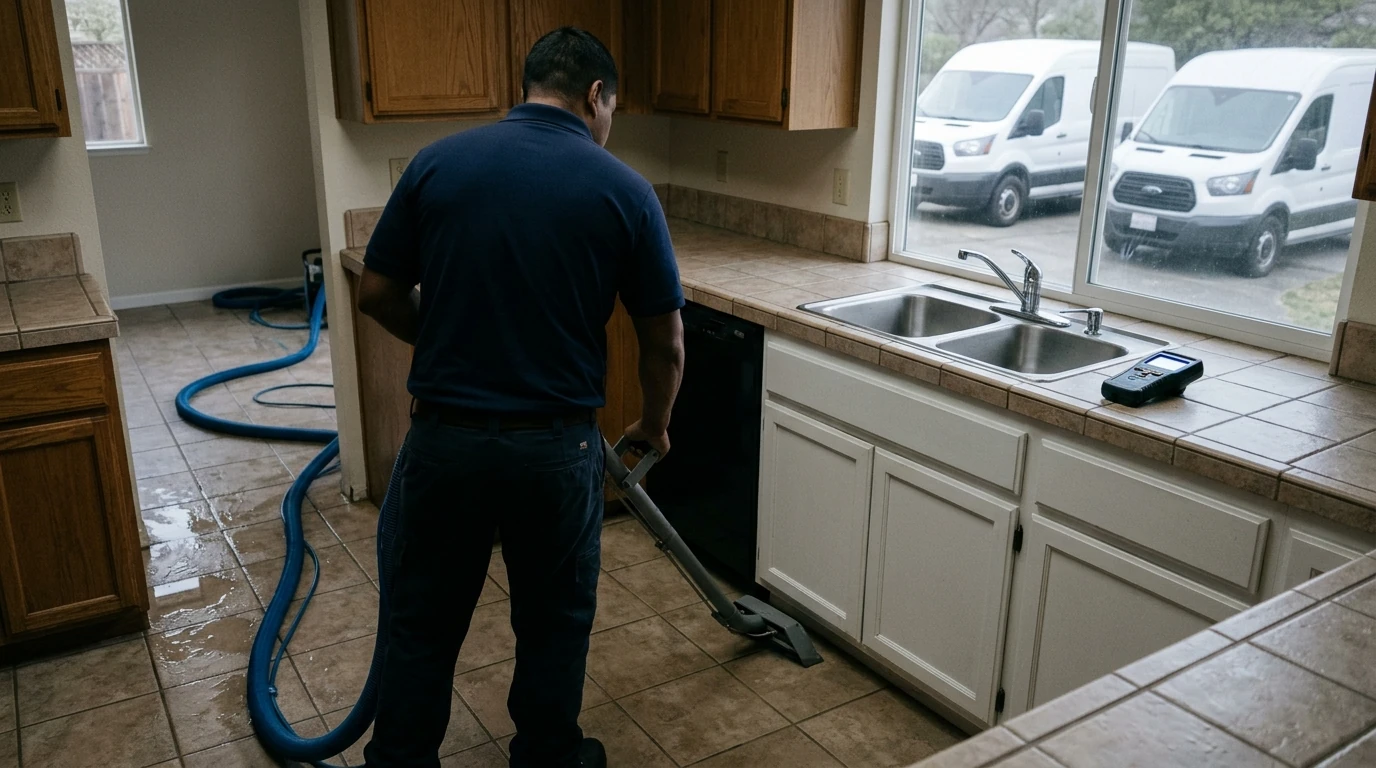
- Standing water extraction. Truck-mounted or portable extraction units pull free-standing water from floors, carpet, and padding.
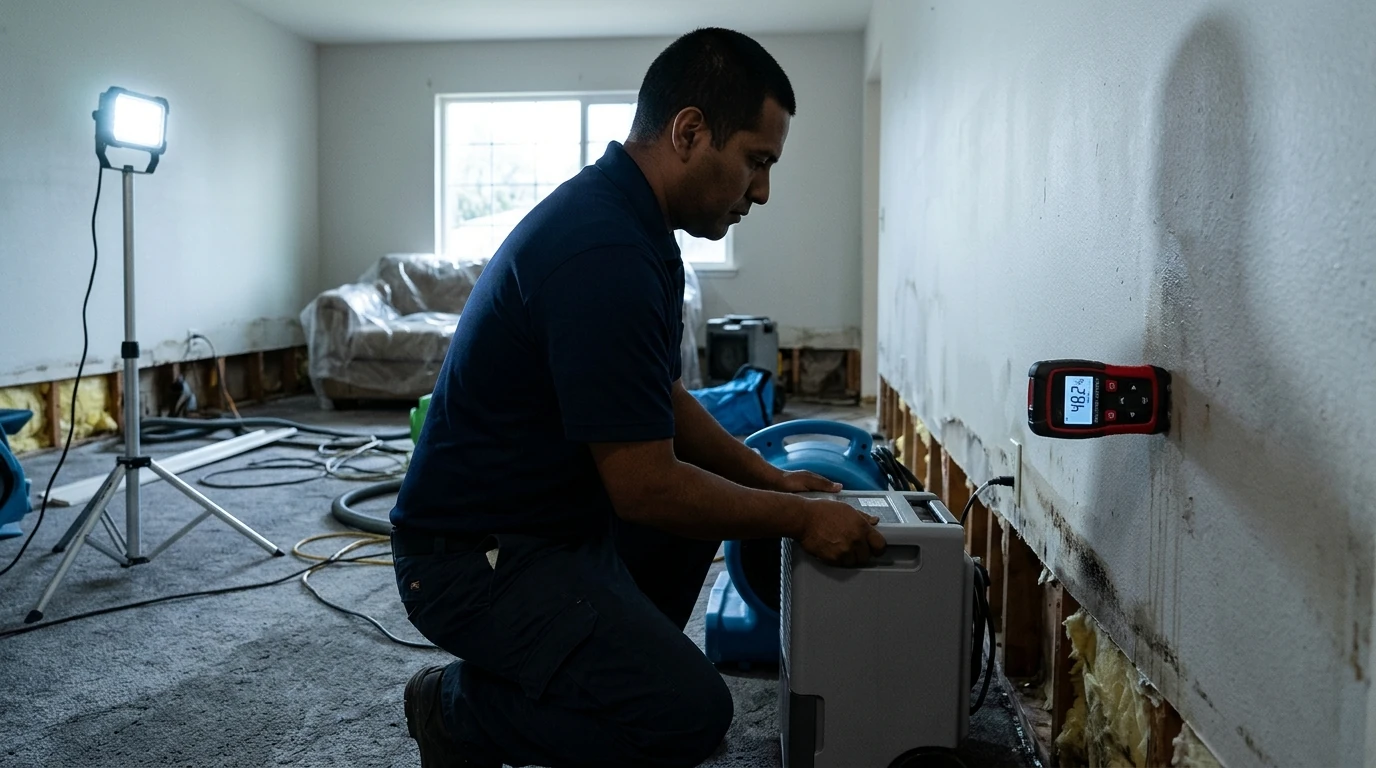
- Moisture mapping. A moisture meter checks drywall, subfloor, and framing to find how far the water traveled, which is often further than it looks.
- Equipment setup. Air movers and LGR dehumidifiers get placed based on the moisture map, not just the visible wet area.
- Daily monitoring. Moisture readings get rechecked, usually daily, until materials return to a normal dry standard.
- Documentation. Photos, readings, and a final verification report go into the file, which is what an adjuster wants to see for a claim.
This is the same framework laid out in our step-by-step water damage restoration process post, if you want the longer version.
What Should You Do Right Now If You Have Standing Water?
If water is actively pooling, shut off the source if you can safely reach it, move anything you can lift off the floor, and avoid running a shop vac on more than an inch or two of water. Call for extraction before the water has a chance to wick into drywall and flooring, since every hour it sits adds to the drying cost later.
If you’re in Santa Maria, Orcutt, Vandenberg Village, or anywhere else in Santa Barbara County, call Coastal Restoration at (805) 345-7440 for a water damage assessment and a written scope before anything gets torn out. Our emergency water removal page has more on what the first visit covers, and the flood damage restoration and water damage restoration pages cover what happens after extraction, when drying and repairs begin.
A flooded room is stressful, but the cost is rarely as unpredictable as it feels once someone actually measures the water category and the square footage affected. Get that scope in writing before you agree to anything, and keep your insurance adjuster in the loop once mitigation starts.
About Coastal Restoration
Coastal Restoration is an IICRC Certified Firm (CSLB license #11245226) serving Santa Maria and the surrounding Central Coast, including Orcutt, Lompoc, Santa Ynez, and Arroyo Grande. Their technicians hold IICRC Water Damage Restoration Technician (WRT) and Applied Structural Drying (ASD) credentials and handle water damage, flood response, mold remediation, fire and smoke cleanup, sewage removal, and crawl space encapsulation across the region, answering the phone 24/7.