Water Leak Detection in Santa Maria
Water leak detection in Santa Maria and surrounding areas. IICRC-certified, insurance billing accepted. Call (805) 345-7440.
A water bill that jumps for no obvious reason, a warm spot on the slab that wasn’t there last month, a musty smell near the baseboards with no visible puddle anywhere in sight: these are the signals that send homeowners searching for water leak detection in Santa Maria instead of a plumber. By the time water shows itself on a wall or ceiling, it has usually been traveling through framing, under flooring, or beneath a slab for days or weeks. Finding the source before it finds daylight is the entire point of this service.
What Water Leak Detection Actually Involves
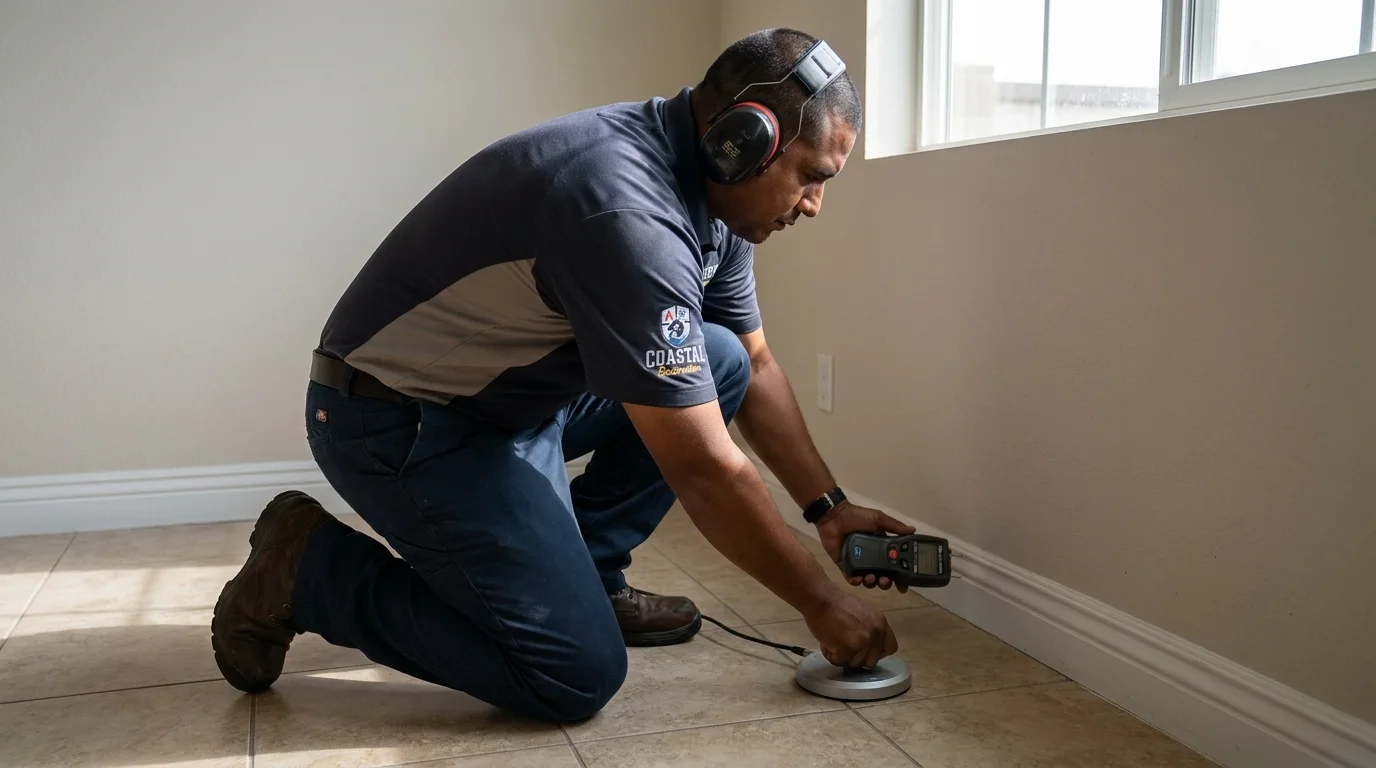
Leak detection is a diagnostic service, not a repair. The goal is to pinpoint the exact location of a hidden water leak in a wall, under a slab, or inside a plumbing line without tearing the structure apart to look for it. Technicians use acoustic listening equipment that picks up the sound of pressurized water escaping a pipe, infrared thermal imaging that reads temperature differences in flooring and drywall, and moisture meters that map how far water has actually traveled from its source. For slab leak detection specifically, this often includes hydrostatic pressure testing on the plumbing system to isolate whether the leak is on the hot or cold line, and where along that line it sits. A typical inspection runs one to three hours depending on the size of the structure and how many fixtures and lines need to be tested.
Our Process
- Intake and symptom review. We ask about water bill history, any sounds of running water, visible staining, or flooring that feels warm, soft, or uneven. This narrows the search area before any equipment comes out.
- Non-invasive scanning. Thermal imaging and acoustic sensors sweep the suspected zone first. This is how we find a water leak in a wall or under a slab without cutting drywall or breaking tile on a guess.
- Pressure and isolation testing. For suspected slab leaks, we isolate sections of the plumbing system and test pressure drop to confirm which line is losing water and roughly where.
- Moisture mapping. Once the source area is narrowed, moisture meters confirm how far saturation has spread into drywall, subfloor, or insulation, which matters for both the repair plan and any drying that follows.
- Written findings and access point. We mark the smallest reasonable access point for a plumber or repair crew and document everything in a written report, including photos and moisture readings, for your records or your insurance carrier.
What Separates a Good Leak Detection Response From a Bad One
The most common mistake is guessing instead of confirming. A contractor who opens drywall in three places before finding the actual leak has cost a homeowner unnecessary repair work and a bigger patch job than the leak required. Good leak detection isolates the source to within inches before any cutting happens.
The second mistake is stopping at “found it” without checking how far the water traveled. A slab leak detection job that confirms the leak location but skips moisture mapping of the surrounding subfloor can miss saturated material that turns into a mold problem weeks later. Insurance adjusters reviewing a claim will also look for documented moisture readings beyond the leak point itself, not just a photo of the pipe. Thorough reports that show the full extent of affected material tend to move claims along faster than a one-line summary.
What Does Water Leak Detection Cost?
Costs vary based on how accessible the plumbing is, whether the leak is in a wall, under a slab, or behind a fixture, and how much testing equipment the job requires. These are typical industry ranges, not a quote: every property is different, and Coastal Restoration Services Inc provides a written scope before any work begins.
| Scenario | Typical range |
|---|---|
| Basic acoustic/thermal inspection, single area | $250 - $500 |
| Whole-house leak inspection, multiple fixtures | $400 - $800 |
| Slab leak detection with pressure isolation | $500 - $1,200 |
| Leak detection plus moisture mapping of affected framing | $600 - $1,500 |
| Complex or multi-story structures, extended diagnostics | $1,000 - $2,000+ |
Homeowners insurance typically covers the sudden, accidental discharge of water and often the cost of locating the leak if it’s required to make the repair, but it generally excludes damage from long-term leaks tied to deferred maintenance, so documentation of when the leak likely started matters.
Seasonal & Regional Considerations
Santa Maria’s mix of older ranch-style homes and newer slab-on-grade construction means both copper supply lines and slab plumbing are common across the area, and both fail in different ways. Copper pinhole leaks tend to show up in homes with older plumbing runs, while slab leaks are more often tied to shifting soil or age-related pipe wear beneath the foundation. Either way, a leak that goes undetected for more than a day or two in a warm Central Coast home gives mold a real head start, which is why catching it early matters more than most homeowners expect.
Service Area
Coastal Restoration Services Inc provides water leak detection throughout Santa Maria and surrounding Central Coast communities. If your property is outside Santa Maria proper, ask about coverage for your specific city.
If your water bill doesn’t add up or you can smell moisture you can’t find, don’t wait for it to show up on the ceiling. Call (805) 345-7440 to schedule a leak detection inspection and get a written diagnosis before any repair work starts.
Frequently Asked Questions
Does homeowners insurance cover water leak detection?
How do you find a water leak in a wall without cutting it open?
What's involved in slab leak detection specifically?
How long does a leak detection inspection take?
What should I do while I wait for a leak detection appointment?
Looking for the best water leak detection company in Santa Maria?
Coastal Restoration Services Inc provides licensed and insured water leak detection in Santa Maria, CA and the surrounding area. Customers rate us 5.0 out of 5 stars across 29 Google reviews. We answer calls 24/7 — call (805) 345-7440 for immediate help.
Need Water Leak Detection now?
We respond 24/7 across Santa Maria and surrounding CA cities.
Related Coverage
- Our Restoration Services
- Contact Coastal Restoration Services Inc
- Restoration Services in Arroyo Grande
- Restoration Services in Atascadero
- Restoration Services in Avila Beach
- Restoration Services in Ballard
- Restoration Services in Blacklake
- Restoration Services in Buellton
- Restoration Services in Callender
- Restoration Services in Cambria
- Restoration Services in Edna
- Restoration Services in El Paso de Robles
- Restoration Services in Grover Beach
- Restoration Services in Guadalupe