
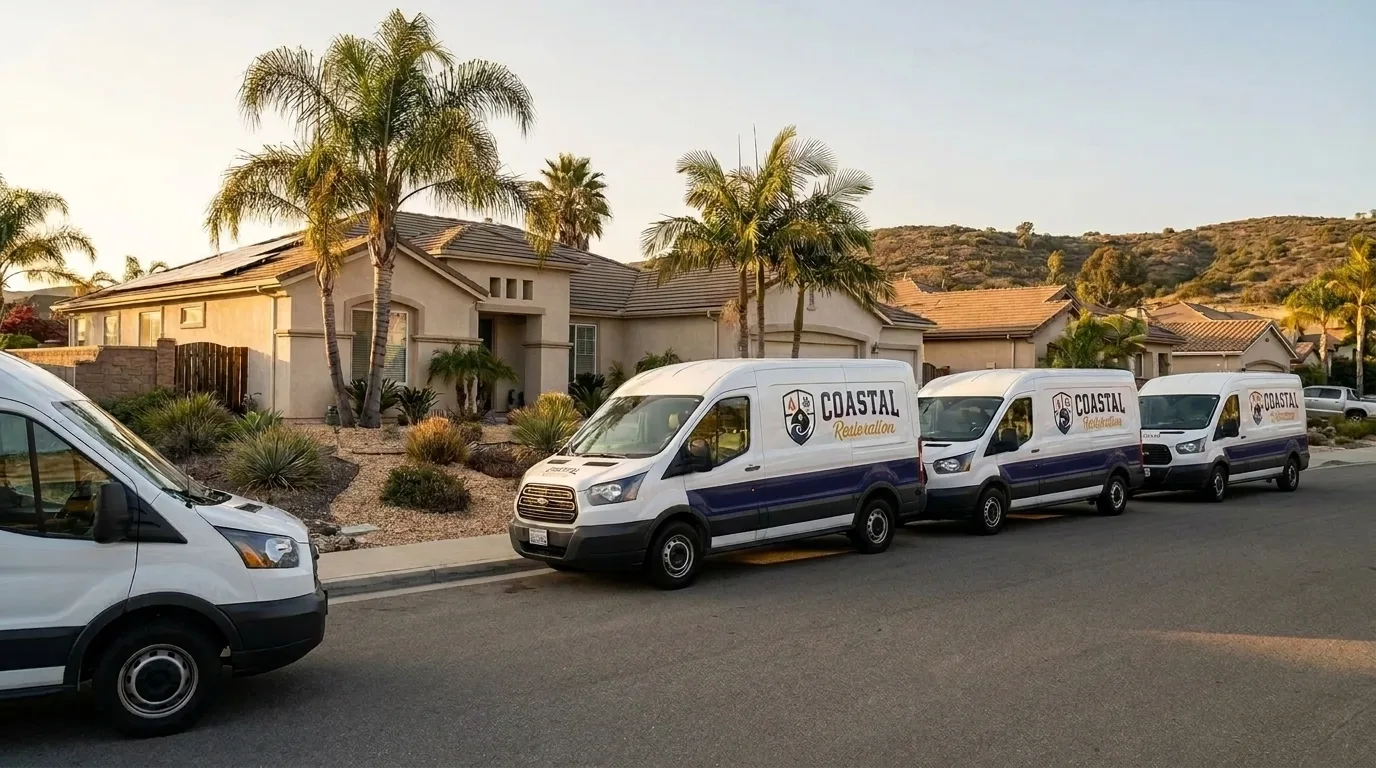
Vandalism & Graffiti Removal in Santa Maria
Vandalism and graffiti removal in Santa Maria and across the Central Coast. IICRC Certified Firm, licensed and insured, insurance billing accepted. Call (805) 345-7440.
Vandalism rarely leaves just one kind of damage behind. A single incident often combines spray-painted graffiti on a stucco or block wall, a broken window or storefront door, forced-entry damage to a frame or lock, and debris scattered across the property. Each of those surfaces and materials needs a different approach, and getting the approach right is the difference between a clean repair and a permanent reminder that the property was hit. Vandalism and graffiti removal restores the property to its pre-loss condition, documents the loss for insurance, and, where the situation calls for it, secures the building so it is not vandalized again the same week.
What vandalism and graffiti removal actually involves
Graffiti removal depends almost entirely on the substrate. Painted block, raw concrete, sealed stucco, brick, glass, metal, and wood each respond differently to chemical removers, controlled-pressure washing, and abrasive media. Using the wrong solvent on the wrong surface can drive pigment deeper into the pores or strip a protective coating that costs more to replace than the graffiti did. That is why the first step is always to identify the material and test, not to reach for a pressure washer and hope.
Broken-glass cleanup goes well beyond sweeping. Tempered safety glass, the kind used in most commercial doors and windows, shatters into small cubes that can travel fifteen to twenty feet and settle into soil, landscaping beds, door tracks, and mechanical intakes. A quick sweep leaves fragments behind that turn up for weeks. Forced-entry damage adds another layer: splintered door framing, bent metal frames, and compromised weatherstripping that will not be obvious until the next storm blows through. A thorough job addresses all of it together rather than treating the graffiti as the whole problem.
Our process
-
Assessment and documentation. Every affected surface is photographed before any cleanup begins, the graffiti is measured, and the paint type and damage are recorded surface by surface. When the loss is an insurance claim, this documentation is written to match what adjusters look for.
-
Securing the property. If a window or door was broken or a building left open, the opening is boarded and made weather-tight first, so the interior is protected while the rest of the work is scheduled. Emergency board-up and tarping is handled as part of the same response.
-
Surface-specific graffiti removal. The removal method is matched to the material. Sealed concrete and block typically respond to alkaline graffiti removers followed by controlled-pressure washing; more porous stucco or brick may need a longer chemical dwell time or light abrasive media; glass and metal use solvent-based removers applied carefully to avoid etching. Where chemical removal alone will not fully restore the surface, a color-matched coating or repaint is applied.
-
Repair and cleanup. Forced-entry damage to frames, locks, and trim is repaired, broken glass is systematically cleared from both the immediate area and the surrounding soil and drainage, and interior fragments are fine-vacuumed. The property is returned to a clean, secure condition.
-
Final walkthrough and prevention. Every surface is checked for a clean, shadow-free result. On high-risk surfaces that have been hit before, a sacrificial anti-graffiti coating can be applied so future tags wash off with a low-pressure rinse instead of a full chemical treatment.
What separates a good vandalism job from a bad one
The most common failure is treating vandalism as a single-trade job: pressure-wash the paint and call it finished. On porous masonry that approach usually spreads the pigment rather than removing it, leaving a ghost image that becomes visible every time the wall gets wet. A technician who tests the substrate and pre-treats it correctly avoids that outright.
The second place shortcuts show up is documentation. Adjusters handling vandalism claims want an itemized record: each surface affected, the square footage of graffiti, the type of paint or marker, and photos taken before any cleanup. A claim submitted with only a general description and a single total invoice frequently comes back as a partial payment or a request for more paperwork that delays the settlement. Documenting the full loss up front is what protects the payout.
What does vandalism and graffiti removal cost?
Costs vary widely with the surface types, how far the paint has penetrated, and whether broken glass or forced-entry damage is part of the loss. The ranges below are typical industry figures, not Coastal Restoration Services Inc quotes.
| Scenario | Typical range |
|---|---|
| Single graffiti tag, sealed surface (under 10 sq ft) | $200 - $600 |
| Multi-surface graffiti, residential exterior | $600 - $2,000 |
| Commercial storefront graffiti plus broken-glass cleanup | $1,500 - $4,500 |
| Forced-entry damage plus graffiti and debris cleanup | $2,500 - $7,000 |
| Emergency board-up (per opening) | $150 - $450 |
| Anti-graffiti protective coating | Priced by surface area |
Every incident is different. Coastal Restoration Services Inc provides a written scope of work before any work begins, so you know exactly what is included. Because vandalism is typically a covered peril, most of this work is billed through your insurance subject to your deductible, and thorough documentation is what keeps the claim moving.
Seasonal and regional considerations
Along the Central Coast, the marine environment shapes both the damage and the repair. Salt air and coastal moisture keep masonry surfaces damp, which can let pigment set into porous stucco and block if graffiti is left in place, so the sooner a fresh tag is treated the cleaner it comes off. Strong offshore winds work against a poorly secured opening, which is why a broken window or door on a vandalized building should be properly boarded rather than temporarily covered. Commercial corridors and industrial frontage around Santa Maria, Orcutt, and Lompoc tend to see the block, metal, and stucco surfaces that each call for their own removal chemistry.
Service area
Coastal Restoration Services Inc is based in Santa Maria and serves property owners and managers throughout the Central Coast, including Orcutt, Nipomo, Guadalupe, Lompoc, Vandenberg Village, Los Alamos, Santa Ynez, Solvang, Buellton, Arroyo Grande, Grover Beach, Pismo Beach, San Luis Obispo, Atascadero, and El Paso de Robles. As a locally operated, licensed and insured IICRC Certified Firm, we handle vandalism and graffiti work both as a standalone service and as part of a larger board-up or biohazard response.
If you are looking at graffiti on a wall, glass on the sidewalk, or a door that will not close right, the right next step is to document and secure the property before the damage sets or the weather gets in. Call Coastal Restoration Services Inc at (805) 345-7440 to begin your vandalism assessment and receive a written scope before any work starts.
Frequently Asked Questions
Does property insurance cover vandalism and graffiti removal?
How fast does spray paint bond to stucco and block, and does it matter how soon I call?
Can graffiti be removed without leaving a shadow or ghost image?
What should I do first if my property was vandalized overnight?
Looking for the best vandalism & graffiti removal company in Santa Maria?
Coastal Restoration Services Inc provides licensed and insured vandalism & graffiti removal in Santa Maria, CA and the surrounding area. Customers rate us 5.0 out of 5 stars across 29 Google reviews. We answer calls 24/7 — call (805) 345-7440 for immediate help.
Need Vandalism & Graffiti Removal now?
We respond 24/7 across Santa Maria and surrounding CA cities.