Emergency Basement Flooding Cleanup in Santa Maria
Emergency basement flooding cleanup in Santa Maria and surrounding areas. IICRC-certified, insurance billing accepted. Call (805) 345-7440.
Basement flooding in Santa Maria? Call now for emergency service. A flooded basement rarely stays a basement problem. Water finds the lowest point in the structure, soaks into framing and subfloor from underneath, and starts breaking down drywall within hours. By the time carpet feels squishy underfoot or you smell that first hint of mustiness, the water has usually already migrated into wall cavities and under built-in cabinetry where it’s invisible from the surface.
What basement flooding cleanup actually involves
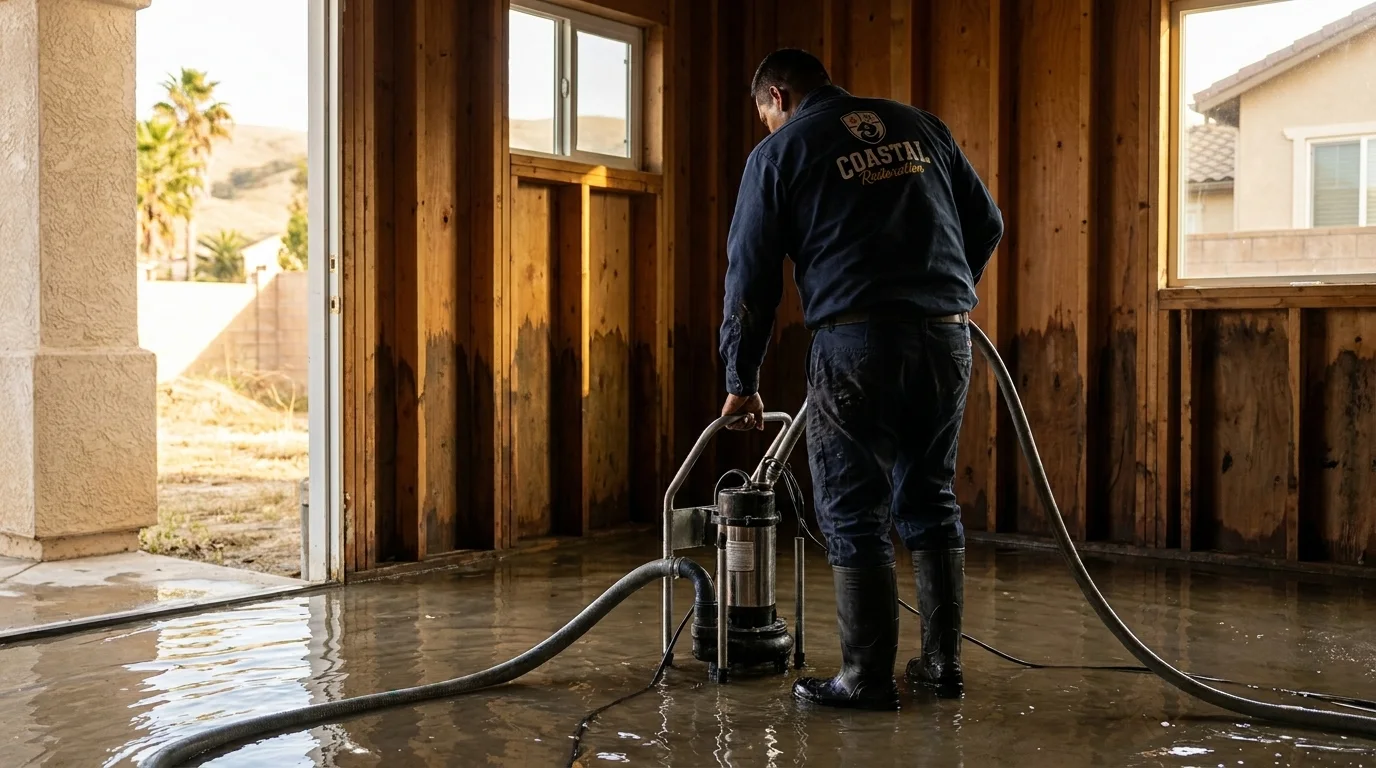
Basement water removal is different from drying out an upstairs room. Basements are below grade, which means walls are in constant contact with saturated soil, there’s often no exterior drainage path for extracted water, and ventilation is limited, so humidity has nowhere to go without mechanical help. Our crews bring submersible pumps and truck-mounted extraction units for standing water, then move to low-grain refrigerant dehumidifiers and axial air movers sized for the square footage and ceiling height of the space. Depending on how long the water sat and what it contacted, cleanup can mean pulling baseboards to dry wall cavities, removing saturated insulation, or cutting drywall at the flood cut line to stop wicking. Drying a finished basement typically runs several days of monitored equipment time, not a single visit.
Our process
- Source and standing water assessment. We confirm where the water is coming from (groundwater intrusion, a failed sump pump, a supply line break, storm runoff) and determine if it’s clean, gray, or contaminated water, since that drives both the drying approach and any demolition decisions.
- Extraction. Standing water comes out first with submersible pumps and extraction wands, including water trapped under carpet pad and inside wall cavities below the flood line.
- Controlled demolition where needed. Saturated drywall, baseboard, and insulation that can’t dry in place are removed to prevent mold colonization behind the wall, following a flood cut rather than guessing at the waterline.
- Drying and moisture monitoring. Air movers and dehumidifiers run on a schedule, with daily moisture readings on framing, subfloor, and masonry walls using penetrating meters until materials hit dry standard, not just until the space looks dry.
- Containment if contamination is present. Sewage backup or long-standing groundwater intrusion gets treated as Category 2 or 3 water, which means isolating the work area and following S500 protocols for affected materials.
What separates a good basement flooding response from a bad one
The most common mistake is drying the visible surfaces and declaring the job done while the stud bays, sill plate, or subfloor underneath engineered flooring stay wet. Moisture trapped behind a dried drywall surface is exactly the condition mold needs, and it can colonize in as little as 24 to 48 hours in a humid, unventilated basement. A second common gap is skipping documentation: insurance adjusters want moisture logs, photos of the affected materials before demolition, and equipment run-time records, not just a verbal confirmation that the space is dry. Operators who don’t track this leave homeowners arguing with a claims adjuster over what was actually done. We document moisture readings at each visit and photograph materials before any removal, which is also what supports a claim if the loss is covered.
What does basement flooding cleanup cost?
Costs depend on how much standing water there was, how long it sat before cleanup started, whether the basement is finished or unfinished, and whether any demolition is needed. These are typical industry ranges, not a quote; every loss is different, and we provide a written scope before any work begins. Homeowners insurance typically covers basement flooding when the source is a sudden and accidental event like a burst pipe or sump pump failure, but it generally excludes flooding from surface water or groundwater unless you carry a separate flood policy.
| Scenario | Typical range |
|---|---|
| Unfinished basement, clean water, minor standing water | $1,000 - $2,500 |
| Finished basement, clean water, carpet and pad removal | $2,500 - $5,500 |
| Finished basement with drywall and insulation removal | $4,500 - $9,000 |
| Category 2 (gray water) cleanup with contamination protocols | $5,000 - $11,000 |
| Category 3 (sewage/groundwater) with containment and demolition | $8,000 - $18,000+ |
| Structural drying add-on (extended equipment time, multiple rooms) | $1,500 - $4,000 |
Seasonal & regional considerations
Santa Maria’s rainy season runs roughly from late fall through early spring, and that’s when most basement and lower-level flooding calls come in, usually tied to saturated ground around the foundation or a sump pump that can’t keep pace with sustained rainfall. Many homes in this part of the Central Coast were built with foundations and drainage systems not designed for heavy, sustained storm events, so a basement that’s never flooded before can take on water during an unusually wet winter. Outside storm season, flooding is more often tied to a failed water heater, washing machine supply line, or slab leak feeding downward into a lower level.
Service area
We respond to basement and lower-level flooding throughout Santa Maria and nearby communities along the Central Coast, including homes and commercial properties with the older foundation styles common to this part of the county.
If water is actively rising or has already stopped and you’re staring at soaked carpet and drywall, don’t wait for it to “dry on its own.” Call (805) 345-7440 to schedule basement water removal and start structural drying before mold has a chance to take hold.
Frequently Asked Questions
Does homeowners insurance cover basement flooding cleanup?
How long does it take to dry out a flooded basement?
Do you need to remove drywall and insulation after a basement flood?
What's the difference between clean water and contaminated basement flooding?
What should I do while waiting for basement flood cleanup to start?
Looking for the best basement flooding cleanup company in Santa Maria?
Coastal Restoration Services Inc provides licensed and insured basement flooding cleanup in Santa Maria, CA and the surrounding area. Customers rate us 5.0 out of 5 stars across 29 Google reviews. We answer calls 24/7 — call (805) 345-7440 for immediate help.
Need Basement Flooding Cleanup now?
We respond 24/7 across Santa Maria and surrounding CA cities.
Related Coverage
- Our Restoration Services
- Contact Coastal Restoration Services Inc
- Restoration Services in Arroyo Grande
- Restoration Services in Atascadero
- Restoration Services in Avila Beach
- Restoration Services in Ballard
- Restoration Services in Blacklake
- Restoration Services in Buellton
- Restoration Services in Callender
- Restoration Services in Cambria
- Restoration Services in Edna
- Restoration Services in El Paso de Robles
- Restoration Services in Grover Beach
- Restoration Services in Guadalupe