TL;DR: When a house fire is extinguished, the water used to knock it down often causes more lasting damage than the flames did, and in Arroyo Grande’s humid coastal air that moisture can start new mold growth within 24 to 48 hours. Water damage, mold, and fire damage are frequently the same insurance claim rather than three separate problems, and a single IICRC-certified crew that handles all three keeps the timeline, the drying logs, and the claim documentation together.
If a grease fire in your Arroyo Grande kitchen was just knocked down, you’re probably not thinking only about the scorched cabinets. You’re standing in a few inches of water, wondering if the ceiling above the stove is going to sag, and whether that water is going to turn into mold before your adjuster even returns your call. This combination isn’t unusual. From the Historic Village to Rancho Grande, most real fire losses on the Central Coast end up as a three-part claim: fire and smoke damage, the water used to extinguish it, and the mold that follows if that water isn’t pulled out fast.
How Are Water Damage, Mold, and Fire Damage Connected?
Fire damage, water damage, and mold are connected because putting out a fire almost always means introducing large volumes of water into a structure, and wet building materials that aren’t dried within 24 to 48 hours start growing mold. In practice, a single fire claim often triggers all three restoration disciplines back to back, not three separate claims filed weeks apart.
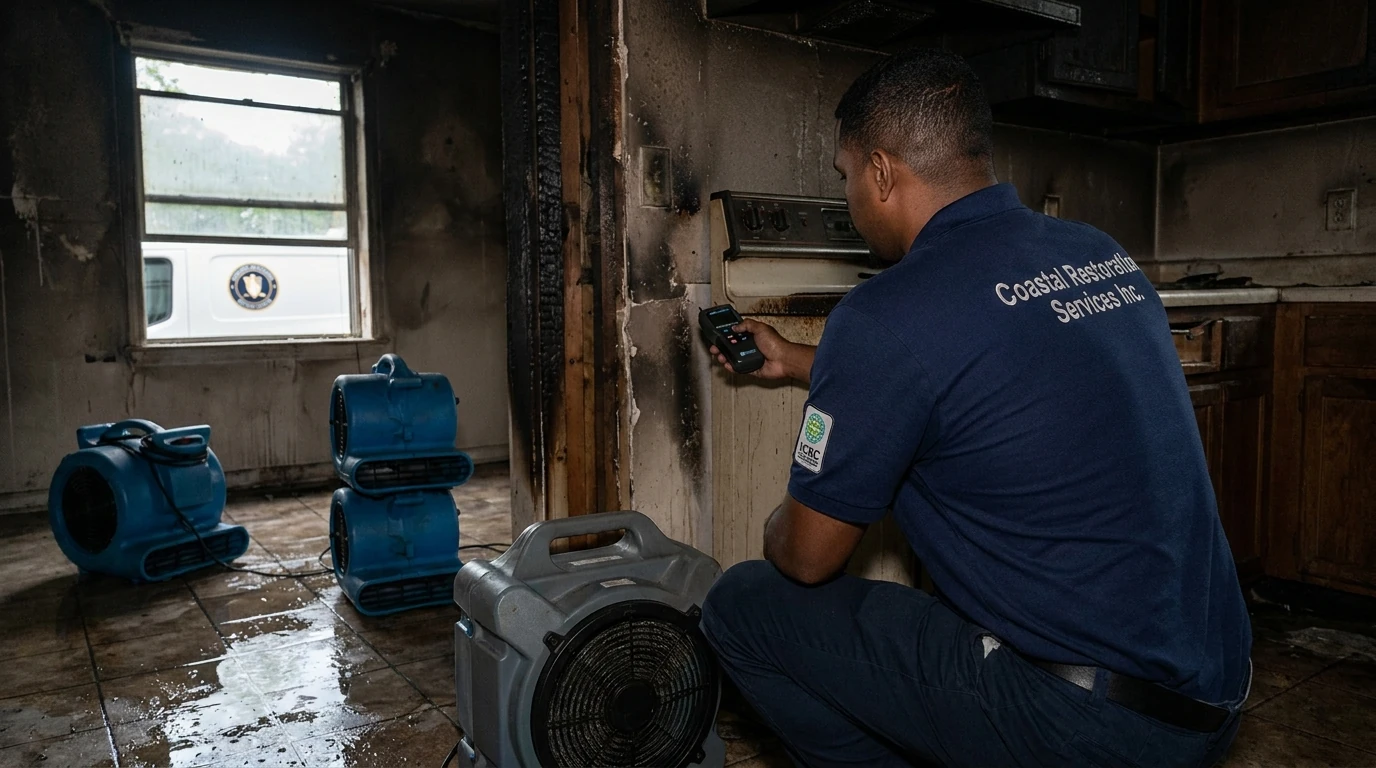
A residential fire response can push hundreds to thousands of gallons of water into drywall, insulation, subfloor, and wall cavities, usually far beyond the room where the fire actually started. That water doesn’t just sit on the surface. It wicks up baseboards, pools under flooring, and saturates insulation that nobody sees until the drywall comes down. The IICRC, the industry body that publishes the S500 water damage standard, sets the 24 to 48 hour window as the point where unaddressed moisture crosses from “wet” to “actively growing mold.”
What Happens When Fire Suppression Water Causes a Second Loss?
Fire suppression water becomes its own distinct loss when it soaks framing, subfloor, and insulation the fire itself never touched, often damaging rooms far from where the fire started. The kitchen fire that’s out in ten minutes can leave water damage spreading through a downstairs hallway for hours afterward.
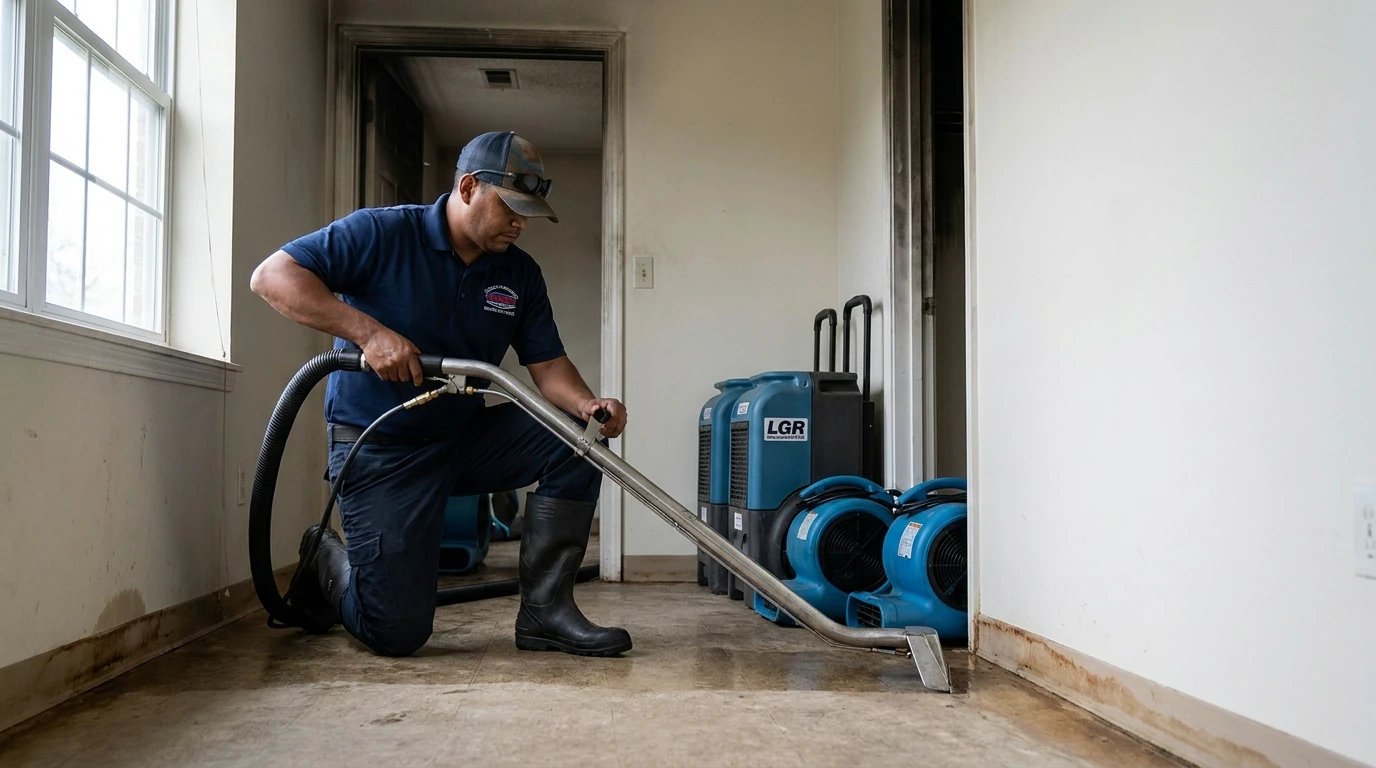
That water also isn’t simply clean tap water by the time it’s done its job. It picks up ash, soot, and whatever was burning, which can push it from Category 1 (clean) toward Category 2 or 3 contaminated water under IICRC classification. That distinction matters for both the drying protocol and what materials can be saved versus what has to be removed. Our breakdown of the fire damage restoration process walks through how extraction, structural drying, and soot cleanup get sequenced on an actual job.
This is also where the insurance math gets complicated. Many homeowners policies cover fire damage cleanly but treat the resulting water intrusion as a related peril, which is good for coverage but means the claim needs documentation showing the water came from firefighting efforts, not a separate, unrelated leak. A written moisture log from day one protects that distinction.
Why Does Fire Damage Lead to Mold So Fast in Central Coast Homes?
Fire damage leads to mold quickly here because firefighting water combines with the humidity typical of Arroyo Grande’s marine layer, creating the damp, dark conditions mold needs within one to three days. Homes closer to Arroyo Grande Creek and the lower village tend to run even more humid than inland neighborhoods like Rancho Grande, which shortens that window further.
Crawl spaces are a common blind spot. Firefighting water drains downward, and a lot of Arroyo Grande’s older homes have vented crawl spaces that trap moisture instead of releasing it. If water sits under the subfloor, mold can establish itself out of sight while the visible fire damage upstairs gets all the attention. That’s one reason crawl space moisture gets checked on every fire-related water loss we respond to, and why some properties need crawl space encapsulation afterward to keep it from recurring.
If you’re not sure whether what you’re looking at after a fire is mold or just soot staining, our guide on black mold versus regular mold covers the visual differences, though a surface swab or air sample is the only way to confirm it. The EPA’s mold guidance is the standard reference most adjusters and remediators work from for acceptable cleanup thresholds.
What Should You Do If You’re Facing Fire, Water, and Mold Damage at Once?
The right first move is to get one certified crew assessing all three problems together, rather than calling a fire cleanup company, a separate water extraction company, and a mold tester on three different schedules. Coordinating three vendors costs time you don’t have in that first 48-hour window.
Before any cleanup starts, photograph every room, including ones that look untouched, since fire suppression water travels further than people expect. Ask whoever responds to document moisture readings in writing, not just verbally, since that log is what supports the insurance claim later. If a window or door was broken during the fire response, get it boarded or tarped immediately. An open structure invites more water in if weather moves through, and it leaves contents exposed to further damage.
Once the structure is secured and extraction starts, salvageable contents, furniture, textiles, electronics, should get moved to a controlled space rather than left in a room that’s still drying. Smoke odor tends to linger in soft materials long after visible soot is gone, which is its own separate cleanup step.
Coastal Restoration Services Inc answers the phone 24/7 and handles fire damage restoration, water extraction, and mold remediation as one coordinated response rather than three separate hires, which keeps your documentation consistent from the first moisture reading to the final clearance test. If you’re sorting through a combination loss right now, a single on-site assessment covering fire, water, and mold scope will tell you more in an hour than three separate phone calls will.
About Coastal Restoration Services Inc
Coastal Restoration Services Inc is an IICRC Certified Firm serving Santa Maria and the Central Coast, including Arroyo Grande, Orcutt, and the Five Cities area, holding California contractor license 11245226. Their technicians carry IICRC Water Damage Restoration Technician (WRT) and Applied Structural Drying (ASD) credentials and handle water damage restoration, fire damage restoration, mold remediation, odor removal, sewage cleanup, storm damage restoration, and contents restoration and storage across the region. The company answers calls 24/7.