TL;DR: In Santa Maria, CA, storm damage cleanup typically runs $200 to $600 for emergency board-up, $450 to $1,500 for roof tarping, and $3,000 to $12,000 or more for full restoration when wind and rain breach the building envelope. The final number depends on how much water got inside, how long it sat before mitigation started, and whether the roof or siding needs structural repair. Most homeowners insurance policies cover sudden wind and wind-driven rain damage, but not groundwater flooding from outside.
If a wind gust just peeled back roof tiles during last night’s Pacific storm and rain is dripping into your attic right now, you have two cost questions, not one: what it takes to stop the water today, and what the full repair bill looks like once an adjuster gets involved. Santa Maria Valley sees strong coastal wind gusts and heavy winter atmospheric-river rain, and older stucco and composition-shingle homes along the Highway 101 corridor, from Orcutt to Vandenberg Village, take a real beating during a hard storm season. Here’s what each piece actually costs.
How much does storm damage cleanup cost in Santa Maria?
Typical storm damage cleanup in Santa Maria runs from a few hundred dollars for emergency mitigation to well over $15,000 for structural damage with interior water intrusion. The table below breaks out the common scenarios by typical range.
| Scenario | Typical Cost Range |
|---|---|
| Emergency board-up (per window or door opening) | $200 - $600 |
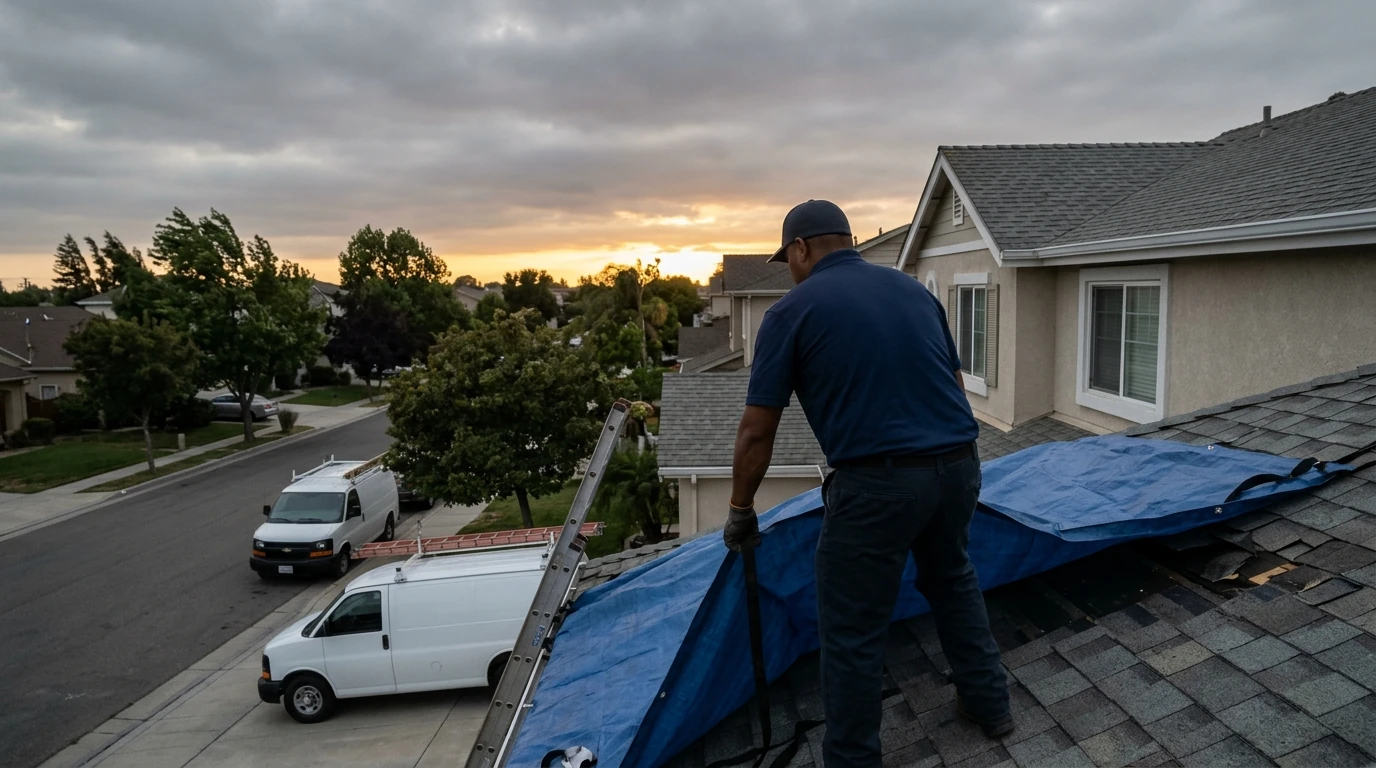
| Emergency roof tarping (single-story residential) | $450 - $1,500 |
| Storm debris removal (branches, fencing, loose material) | $300 - $1,800 |
| Water extraction and structural drying (minor intrusion) | $1,500 - $4,000 |
| Full storm restoration (moderate wind and rain intrusion) | $3,000 - $12,000 |
| Major structural damage (roof failure, multiple rooms affected) | $15,000 - $50,000+ |
These are typical industry ranges for the Central Coast, not a quote. Every loss is different, and Coastal Restoration Services Inc provides a written scope before any work begins.
What drives the price of storm damage cleanup?
The biggest cost driver is how long water had access to the structure before someone stopped it. A roof breach tarped within hours costs far less to repair than one left open through a full day of rain.
Other factors that move the number:
- Size of the breach. A single broken window costs a few hundred dollars to board; a torn-off section of roof decking costs thousands to tarp and repair.
- Roof pitch and story count. Steep or multi-story roofs need more rigging, safety equipment, and labor time for tarping.
- How much water reached the interior. Once rain gets past the roofline or siding, you’re paying for extraction, dehumidification, and drying on top of the exterior repair. We cover that side of the cost in detail in our water damage restoration cost guide for California.
- Debris volume. Downed branches, torn fencing, and loose roofing material all add disposal fees.
- Material exposure. Drywall, insulation, and flooring soaked by storm water usually need to be removed rather than dried in place once they’ve sat for more than 24 to 48 hours, per the ANSI/IICRC S500 standard for water damage restoration.
- Secondary damage risk. Mold can begin growing on wet materials within 24 to 48 hours, so delayed mitigation adds remediation cost later even if it feels cheaper to wait.
Does homeowners insurance cover storm damage in California?
Most California homeowners policies cover sudden, accidental damage from wind and wind-driven rain, such as a tree limb breaking a window or a gust tearing off roof shingles and letting rain in. What they typically do not cover is damage from surface flooding, groundwater, or water that rises up from outside the home; that requires a separate flood policy through the National Flood Insurance Program or a private flood carrier.
This distinction matters because rain coming through a storm-damaged roof usually starts as relatively clean water, but it can become contaminated the longer it sits in contact with insulation, ceiling material, and HVAC ductwork. Rising floodwater or surface water flowing into a home from outside is treated differently and needs documentation that a storm claim alone won’t provide. The California Department of Insurance’s residential claims guide walks through how claims are typically filed and what documentation insurers expect. Our team also put together a plain-English guide to water damage insurance claims if you want the broader rules before you call your carrier.
Documentation protects your claim either way. Photograph the damage before anything is moved, keep every receipt for emergency mitigation (tarping, board-up, extraction), and get a written scope of work. Most policies also require you to take reasonable steps to prevent further damage, which is exactly what emergency board-up and tarping are for.
What happens during a storm damage cleanup?
Storm cleanup moves in a set sequence: stop the intrusion first, document everything, then dry and repair. Skipping or reordering these steps is what usually turns a $3,000 job into a $15,000 one.
- Emergency mitigation. Crews install tarping or board-up to stop further wind and rain from entering the structure. This happens before any cost discussion about the full repair, because every hour of continued exposure adds damage.
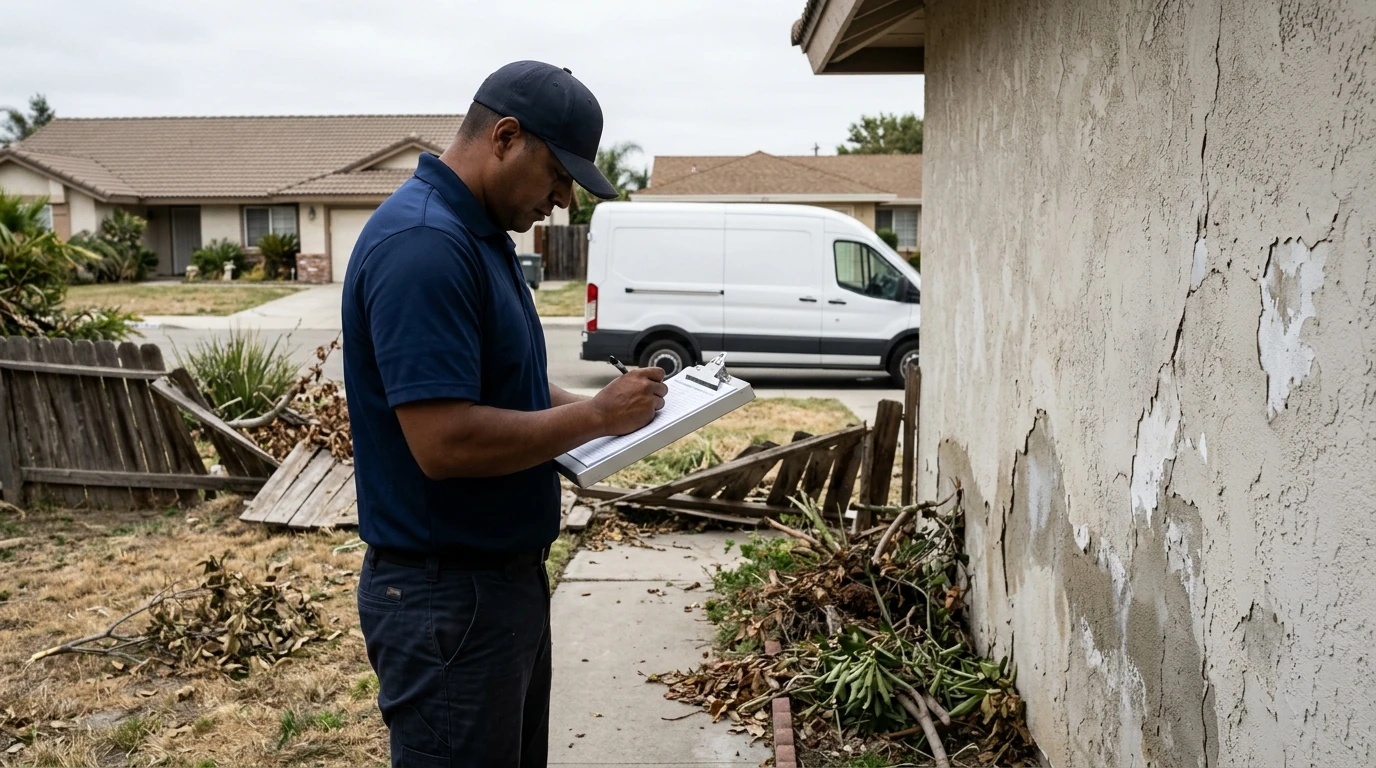
- Damage assessment and documentation. A technician photographs and measures the affected area, checks moisture levels with a meter, and notes which materials are salvageable.
- Water extraction and drying, if interior rooms took on water. This follows the same drying protocols used for any flood damage restoration job: extraction equipment, air movers, and dehumidifiers set to dry the structure to pre-loss moisture levels.
- Debris removal. Downed branches, torn roofing material, and damaged fencing are cleared and hauled off.
- Insurance documentation and written scope. The full damage report, photos, and a line-item scope of work go to your adjuster, supporting the claim rather than slowing it down.
- Repair and reconstruction scheduling. Roofing, drywall, and siding repairs follow once the structure is dry and documented.
If you’re still monitoring an active storm, the National Weather Service is the most reliable source for local warnings and rainfall totals, which can also support your claim timeline.
If you’re looking at a roof breach or standing water right now, the priority is stopping further intrusion, not deciding on a full repair budget. Call Coastal Restoration Services Inc at (805) 345-7440 to get a technician scheduled and a written scope started before the next system moves through.
About Coastal Restoration Services Inc
Coastal Restoration Services Inc is an IICRC Certified Firm (license #11245226) serving Santa Maria and the surrounding Central Coast, including Orcutt, Lompoc, and Vandenberg Village. Their technicians hold IICRC Water Damage Restoration Technician (WRT) and Applied Structural Drying (ASD) certifications and answer the phone 24/7. The company handles storm damage restoration, emergency board-up and tarping, water and flood damage restoration, mold remediation, and fire and smoke cleanup across the region.