
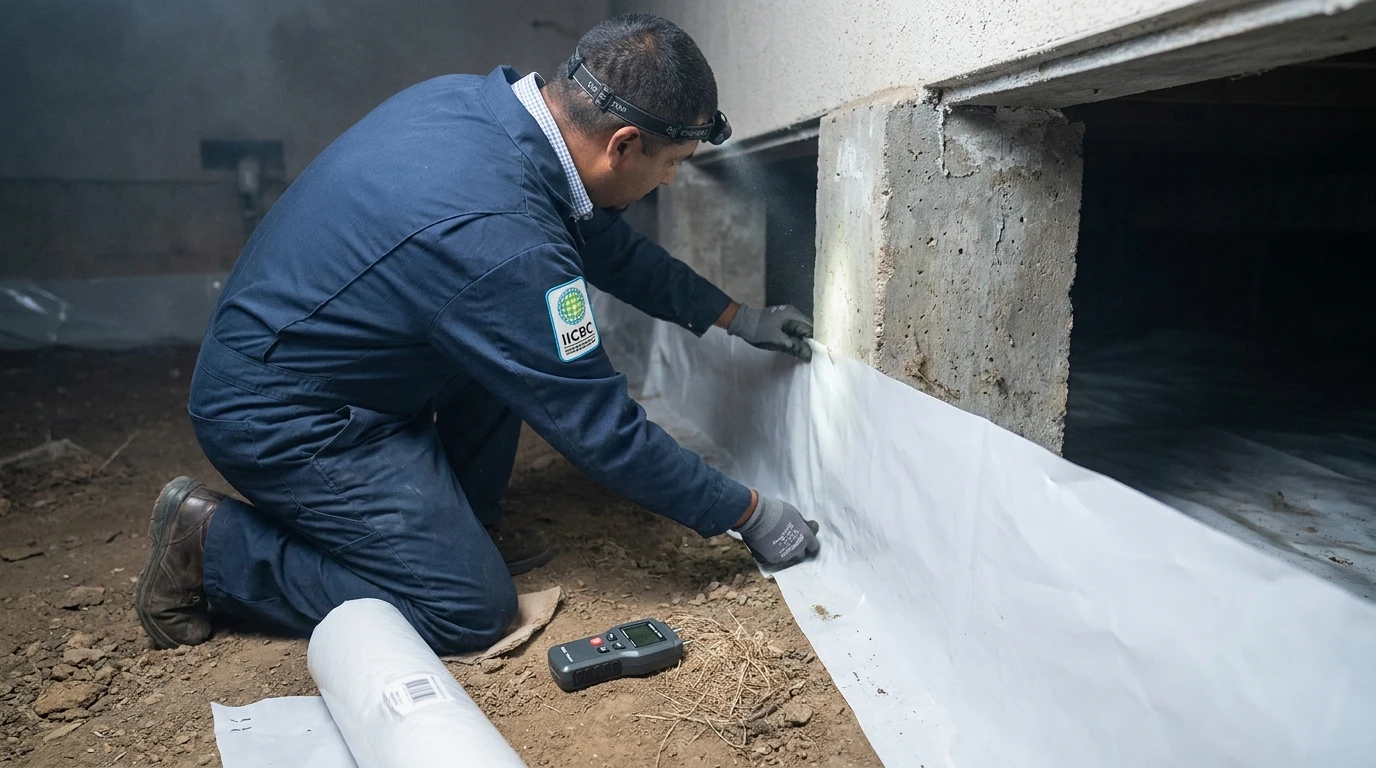
TL;DR: In Santa Maria, CA, crawl space encapsulation typically costs $3,000 to $8,500 for an average single-family home, depending on square footage, vapor barrier thickness, and whether a dehumidifier or sump pump is added. A basic 6-mil liner on a small crawl space can start around $1,500. Full encapsulation with insulation and moisture control can run $10,000 or more. Every crawl space is different, so a written scope before work begins is the only way to know your actual number.
If you just had a home inspection flag crawl space moisture, or you’ve noticed a musty smell coming up through your floor vents, you’re probably trying to figure out whether encapsulation is a $2,000 fix or a $12,000 one before you call anyone. The honest answer is it depends on what’s under your house right now. Central Coast fog and the clay-heavy soils common around Santa Maria and Orcutt hold moisture longer than homeowners expect, which is why vapor barriers alone sometimes aren’t enough here.
How Much Does Crawl Space Encapsulation Cost in Santa Maria, CA?
Most Santa Maria homeowners pay between $3,000 and $8,500 for a standard encapsulation job, with smaller crawl spaces and basic liners coming in lower and full moisture-control systems running higher. The table below shows typical ranges by scope.
| Scenario | Typical Cost Range |
|---|---|
| Basic 6-mil vapor barrier only (crawl space under 1,000 sq ft) | $1,500 - $2,800 |
| Standard encapsulation, 10-12 mil liner, sealed vents (1,000-1,500 sq ft) | $3,000 - $5,500 |
| Encapsulation + dehumidifier | $5,500 - $8,000 |
| Encapsulation + sump pump + drainage matting (high water table areas) | $7,000 - $10,500 |
| Full encapsulation + rigid foam insulation + conditioned air tie-in | $10,000 - $15,000+ |
| Mold remediation add-on (growth found during inspection) | $1,500 - $4,500 additional |
These are typical industry figures, not a quote. The only way to get your real number is a physical inspection, because two homes on the same block can need very different scopes depending on soil drainage and foundation vent placement.
What Factors Push the Price Up or Down?
The biggest cost drivers are square footage, liner thickness, and whether standing water or existing mold is already present. A crawl space that’s dry and accessible costs far less to encapsulate than one with active moisture intrusion.
Specific factors that move the number:
- Square footage and crawl space height. Larger spaces need more material and labor hours. Low-clearance crawl spaces (under 24 inches) slow the work down and add labor cost.
- Vapor barrier grade. A 6-mil liner is the budget option; 10-20 mil reinforced liners cost more but hold up better against puncture and pier abrasion.
- Vent sealing and code requirements. Some older Santa Maria homes have foundation vents that need to be mechanically sealed rather than just covered, which adds material and inspection time.
- Existing moisture or mold. If an inspection finds active mold growth on floor joists or sill plates, that has to be remediated before encapsulation goes in, not instead of it. Our guide to mold remediation cost breaks down what that add-on typically runs.
- Dehumidifier and sump pump needs. Properties near drainage swales or with a documented high water table often need active moisture control, not just a barrier.
- Insulation add-on. Tying the crawl space into your home’s conditioned air with rigid foam insulation adds cost but can lower energy bills in homes with ductwork running through the crawl space.
Does Homeowners Insurance Cover Crawl Space Encapsulation?
Standard homeowners insurance generally does not cover encapsulation itself, because it’s classified as preventive maintenance rather than damage repair. Insurance typically responds to the water damage event, not the long-term moisture-control upgrade.
Where coverage can apply: if a sudden event (a burst supply line, a failed water heater) caused water intrusion into the crawl space and that led to mold growth, the mitigation and mold remediation portion may be covered under your water damage claim, subject to your policy’s mold sub-limit (often $5,000 to $10,000 in California policies). The encapsulation upgrade itself, installed afterward to prevent recurrence, is usually an out-of-pocket improvement. Document everything with photos and a written moisture reading before any work starts; that paperwork is what an adjuster asks for first.
What Does the Encapsulation Process Actually Involve?
A proper encapsulation job follows a specific sequence, and skipping steps is how homeowners end up redoing the work in three years. Here’s the order:
- Moisture and structural inspection. A technician checks relative humidity, moisture content in the framing, and looks for existing mold or wood rot before quoting anything.
- Remediation first, if needed. Any active mold on joists, subfloor, or insulation gets treated and removed per IICRC S520 mold remediation standards before the liner goes down.
- Grading and drainage correction. Low spots that pool water get regraded; a sump pump is added if the water table is high.
- Vapor barrier installation. The liner is sealed to the piers, foundation walls, and overlapped at seams, typically 10-20 mil reinforced polyethylene.
- Vent and access door sealing. Foundation vents are mechanically closed and the crawl space access is sealed to stop outside humid air from migrating in.
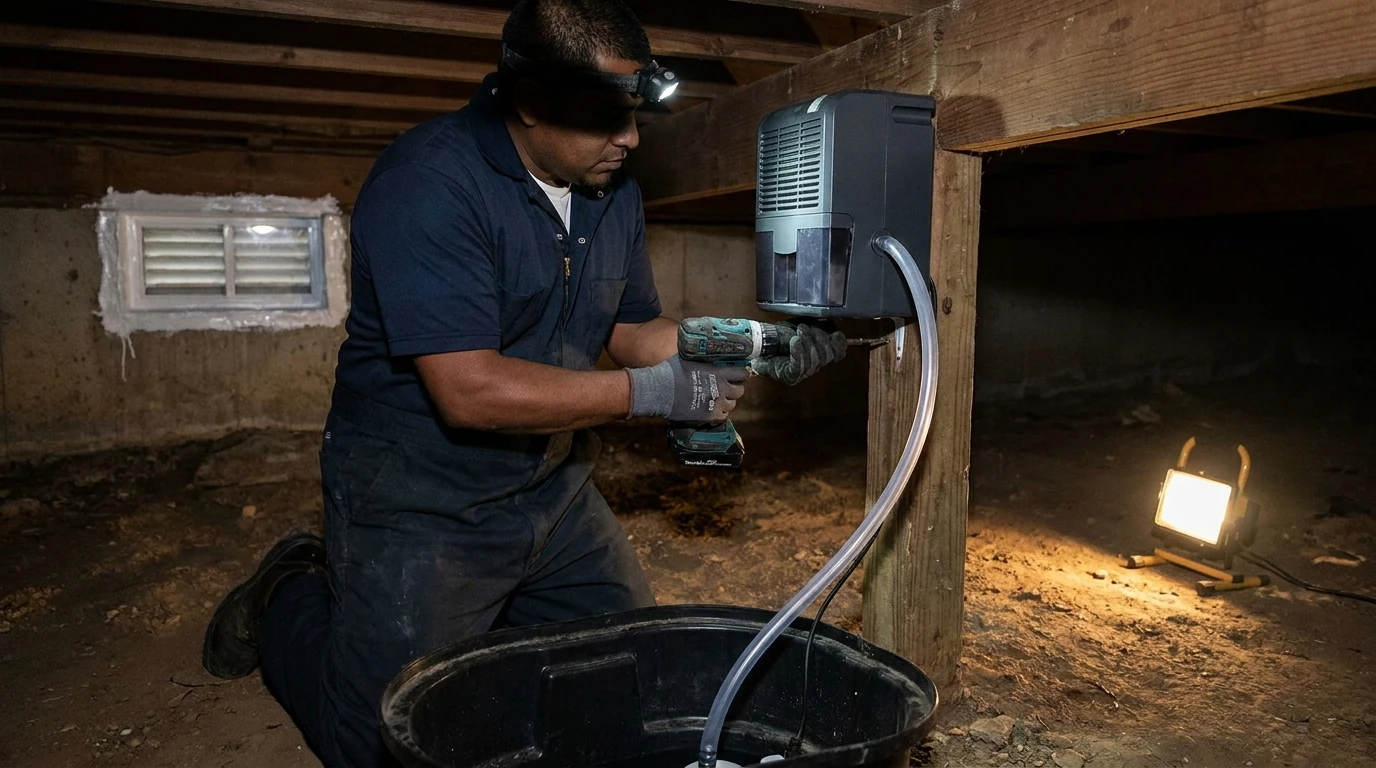
- Dehumidifier or conditioned-air tie-in. For spaces that stay above 55% relative humidity even after sealing, an automatic dehumidifier gets installed and set to a target humidity.
- Final walkthrough and moisture reading. A post-install reading confirms the space is holding below the target humidity before the crew leaves.
Who Should Handle Crawl Space Encapsulation in Santa Maria?
This is a moisture-control job, not a handyman weekend project, because a liner installed wrong traps moisture instead of blocking it. If your crawl space already shows signs of mold or standing water, you want a crew that can remediate and encapsulate in one engagement rather than hiring two separate contractors.
Coastal Restoration Services Inc is an IICRC Certified Firm serving Santa Maria, Orcutt, and the surrounding Central Coast, and handles both the mold remediation and the encapsulation scope when a crawl space needs both. Call Coastal Restoration Services Inc at (805) 345-7440 for a moisture assessment before deciding on a scope of work.
If you’ve noticed signs of hidden mold in your home beyond the crawl space, worth checking that separately, since crawl space moisture and attic or wall-cavity moisture don’t always share a cause.
Get a written scope and a line-item quote before any crew starts work. A legitimate contractor will show you the moisture reading that justifies the recommendation, not just a flat number.
About Coastal Restoration Services Inc
Coastal Restoration Services Inc is an IICRC Certified Firm (license #11245226) serving Santa Maria, CA and the surrounding Central Coast since answering calls 24/7. Their technicians hold WRT and ASD certifications and handle water damage restoration, mold remediation, and crawl space encapsulation across Santa Maria, Orcutt, Lompoc, and neighboring communities.