In Santa Maria, CA, biohazard cleanup typically costs $500 to $15,000 or more, depending on the size of the affected area, the type of contamination, and how much material has to be removed and disposed of as regulated waste. A single contaminated surface in one room runs far less than a multi-room incident involving flooring, subfloor, and HVAC contamination.
If you’re facing this right now, whether it’s an unattended death, a crime scene, a hoarding situation with biohazard material, or an industrial accident, pricing isn’t something a company can quote over the phone with real accuracy. It depends on what a technician finds once they’re inside with testing equipment. What follows is a breakdown of the ranges, the factors that move the number, and what a licensed crew actually does once they arrive.
What Does Biohazard Cleanup Cost in Santa Maria, CA?
Most biohazard cleanup jobs in the Santa Maria area fall between $500 for a contained, single-surface incident and $15,000+ for large-scale decomposition or multi-room contamination. The final number depends heavily on square footage affected, how far fluids traveled into porous materials, and disposal volume.
| Scenario | Typical Cost Range |
|---|---|
| Single surface, contained bodily fluids | $500 - $1,500 |
| Unattended death, moderate fluid saturation into flooring/subfloor | $3,000 - $7,500 |
| Crime scene, contamination across multiple surfaces | $4,000 - $10,000 |
| Decomposition cleanup with odor and structural contamination | $6,000 - $15,000 |
| Large-scale or multi-room biohazard incident | $10,000 - $25,000+ |
| Sharps or medical waste disposal only | $300 - $800 |
These are typical industry ranges for California, not a quote. Every scene is different, and a licensed crew should walk the property and provide a written scope before any work starts.
What Factors Drive Biohazard Cleanup Pricing?
The price moves based on five things: how far contamination spread, what materials absorbed it, how much time passed before cleanup started, what regulated waste disposal requires, and whether structural materials need to come out.
Time elapsed matters more than people expect. A scene cleaned within hours is cheaper than one discovered days later, because fluids and decomposition byproducts soak deeper into subfloor, drywall, and insulation the longer they sit. That often means removing and replacing building materials instead of just disinfecting a surface.
Porous vs. non-porous surfaces change the math. Tile, sealed concrete, and painted drywall can often be disinfected and cleared. Carpet, carpet pad, upholstered furniture, and untreated wood usually have to be removed and disposed of as regulated medical waste, which adds both labor and disposal fees.
Disposal is a separate line item from labor. Biohazard material is classified as regulated medical waste in California and has to be transported and disposed of by a licensed hazardous waste handler, following standards set out in the OSHA Bloodborne Pathogens Standard. That transport and disposal cost scales with volume, not with how dramatic the scene looks.
Odor remediation adds cost when decomposition has occurred. This often requires thermal fogging or hydroxyl generators running for days, on top of the physical cleanup.
Does Homeowners Insurance Cover Biohazard Cleanup?
Many homeowners and landlord policies cover biohazard cleanup when the loss is sudden and accidental, such as an unattended death or an accident, but coverage details vary by carrier and policy language, so it’s worth confirming with the insurer before assuming either way.
Policies typically exclude cleanup tied to illegal activity on the property or ongoing maintenance neglect. A written, itemized scope of work and before-and-after documentation from the cleanup crew is what most adjusters need to process a claim, so ask for that paperwork up front rather than after the fact.
Renters should check with the property owner’s policy and their own renters insurance separately, since responsibility for cleanup cost can fall on either party depending on the lease and the cause of the incident.
What Happens During a Professional Biohazard Cleanup?
A professional biohazard cleanup follows a set sequence: scene assessment, containment, PPE setup, removal of contaminated materials, disinfection to industry standard, and disposal through a licensed medical waste carrier.
- Assessment. A technician documents the scope, identifies affected materials, and tests surfaces to determine how far contamination spread.
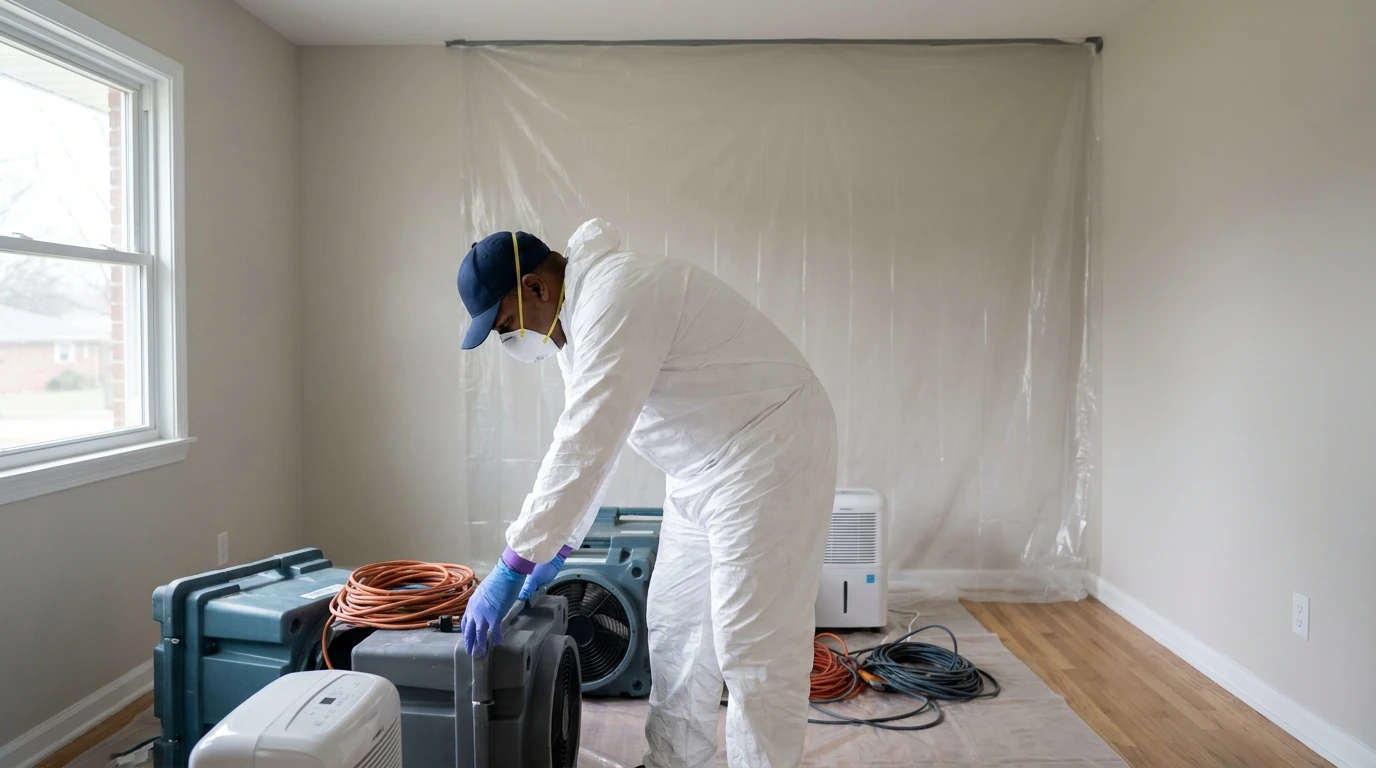
- Containment. The affected area is sealed off with poly sheeting to prevent cross-contamination into unaffected rooms.
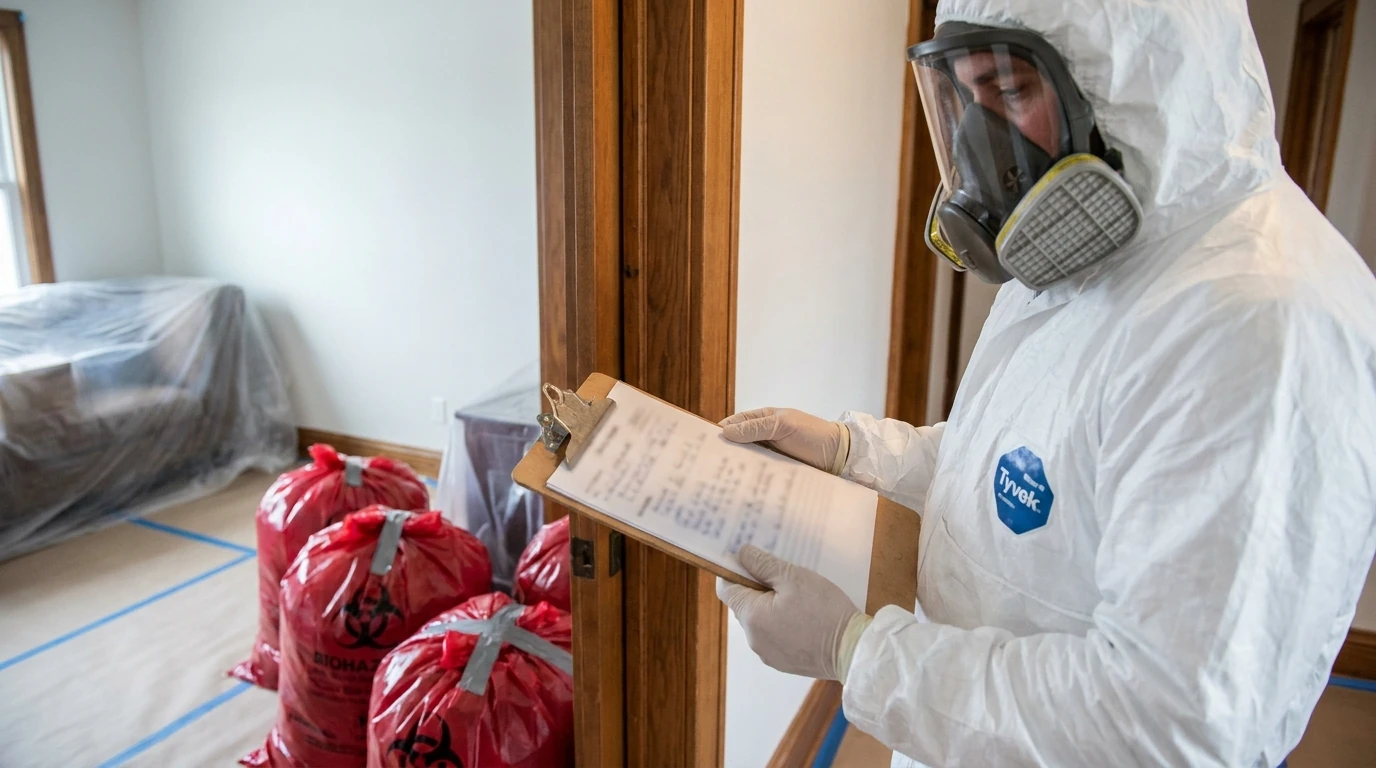
- PPE and site prep. Technicians suit up in Tyvek, double gloves, and respiratory protection before any material is disturbed.
- Removal. Contaminated porous materials (carpet, pad, drywall, insulation) are removed and bagged as regulated waste.
- Disinfection. Remaining surfaces are cleaned and disinfected to the standards outlined in the IICRC S540 Standard for Trauma and Crime Scene Decontamination.
- Disposal. Waste is transported by a licensed medical waste hauler, not placed in regular trash or municipal disposal.
- Clearance. A final walkthrough confirms the space is safe to re-occupy.
Who Should You Call for Biohazard Cleanup in Santa Maria?
Biohazard cleanup should only be handled by a licensed, trained crew, never attempted as a DIY project, because bloodborne pathogens and decomposition byproducts carry real infection risk that household cleaning products don’t address. In Santa Maria, Coastal Restoration Services Inc holds California contractor license #11245226 and operates as an IICRC Certified Firm, answering calls around the clock.
If law enforcement or the coroner’s office has released the scene, the next call should go to a licensed biohazard remediation company before anyone else enters the space. Document the scope with photos only if it’s safe to do so, and avoid touching or cleaning any affected surfaces yourself.
A written scope of work, before you agree to anything, protects you on both the cost and the insurance side. Request a biohazard cleanup assessment before committing to a price over the phone.
About Coastal Restoration Services Inc
The company is an IICRC Certified Firm serving Santa Maria and the surrounding Central Coast, holding California contractor license #11245226. Its technicians handle biohazard cleanup, sewage cleanup, water damage restoration, fire and smoke damage restoration, mold remediation, and related services across the region, with a 5.0 Google rating from 29 reviews and 24/7 phone coverage.
Need help now? Call Coastal Restoration Services Inc at (805) 345-7440.